Prepared in the supplied September 2026 research pack. This draft has not been reverified in this pass. Rules, prices, company status, and numerical claims may need correction.
Keep these questions close.
- Read this as a draft from the supplied research pack.
- Follow the linked sources and check current rules before acting.
- Ask how the evidence fits your region, crop, and scale.
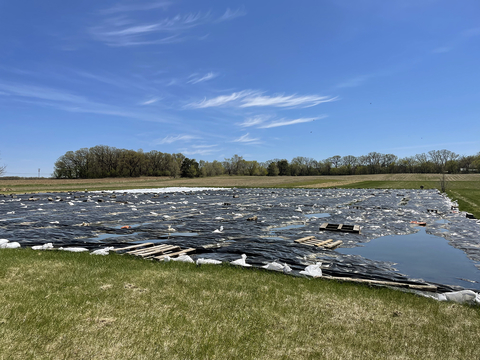
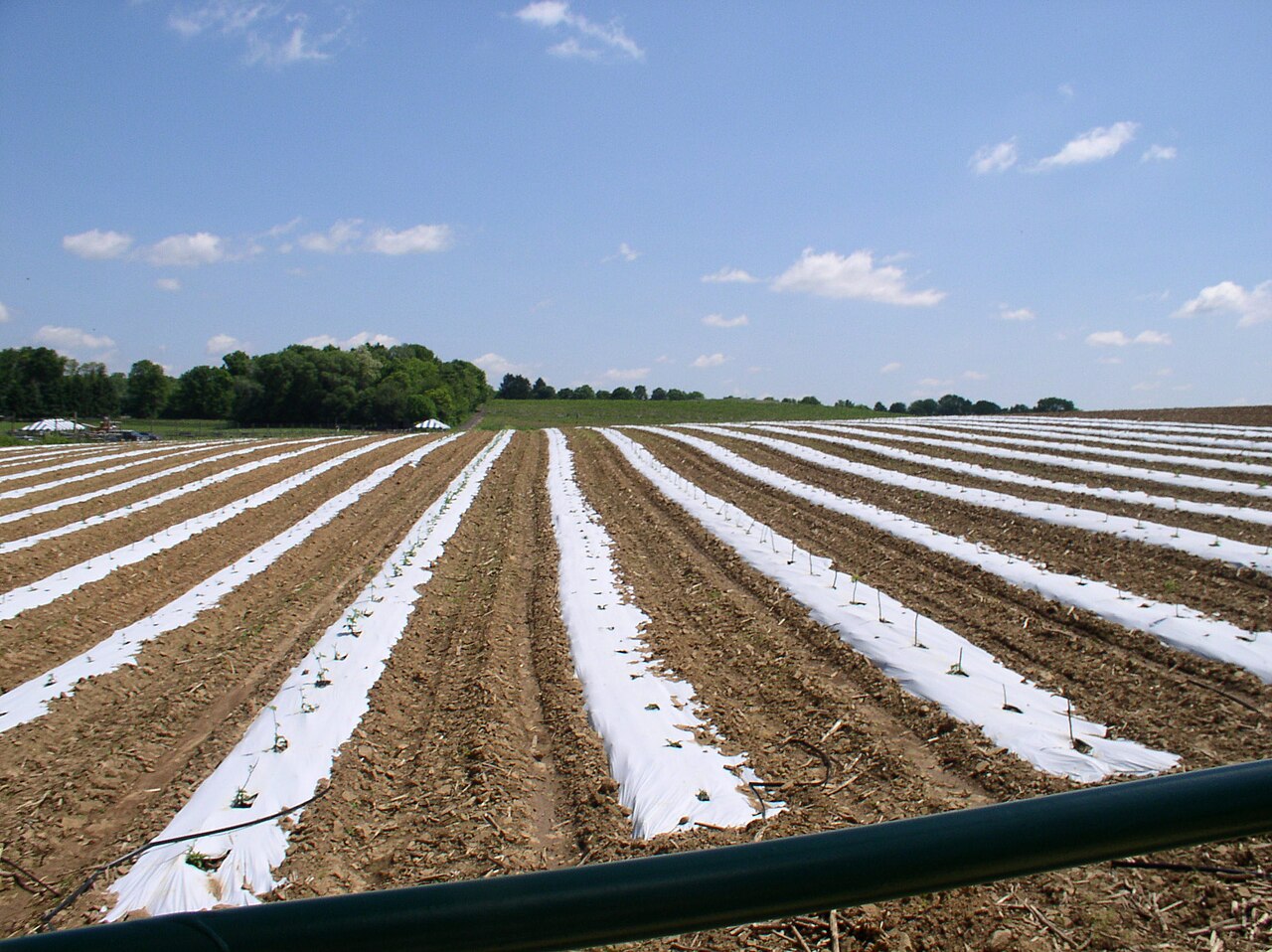
Plastic mulch earns its place on many farms. It warms soil, holds moisture and keeps weeds down. It also leaves something behind. Every torn strip that stays in the field breaks into smaller pieces, and "microplastics in farm soil" has moved from niche research topic to mainstream headline.
In 2026, two studies landed a few weeks apart with messages that seem to point in opposite directions. One links long-term film mulching tightly to rising soil microplastics. The other argues that mulch's share of soil microplastics has been "highly overestimated."
This post walks through both, explains why they can both be right, and ends with a practical plan to reduce plastic on your farm without giving up the benefits of mulch.
Key takeaways
- Agriculture uses about 12.5 million tonnes of plastic a year, according to FAO's 2021 assessment. FAO notes soils are known to contain more microplastics than oceans.
- A 2026 meta-analysis found soil microplastics rise with years of film mulching, and faster in arid climates and sandy soils. It rests on only 12 primary studies.
- A July 2026 field study in China attributed about 8% of soil microplastics to mulch film, with wide regional variation. It found large amounts of leftover film pieces in the soil.
- Both findings can hold: mulch may not be the biggest microplastic source, but long-term use still builds up plastic in soil.
- Biodegradable films are not automatically harmless, and they are not currently allowed on certified organic ground in practice.
- The most reliable steps are within your control: less single-use film, careful removal, and reusable alternatives.
The scale of farm plastic
FAO's 2021 assessment of agricultural plastics offers the widest view:
- Agricultural value chains use 12.5 million tonnes of plastic per year. Crop and livestock production account for 10.2 million tonnes.
- A further 37.3 million tonnes goes into food packaging.
- Asia accounts for nearly half of agricultural plastic use.
- In FAO's words, "Soils are one of the main receptors of agricultural plastics and are known to contain larger quantities of microplastics than oceans."
Mulch film is only one part of that total. It matters because it is laid directly on the soil and is hard to recover completely.
Study 1: microplastics build up with years of mulching
A meta-analysis by Murithi and colleagues, published in August 2026, pooled 12 primary studies from 8 countries (268 observations). It reported:
- A strong correlation between microplastic abundance and years of film mulching (r = 0.82).
- A weighted mean accumulation rate of 47.3 items per kilogram of soil per year, with a non-linear rise over time.
- Model projections of about 4,256 items/kg after 10 years and 20,701 items/kg after 20 years.
- Polyethylene films accumulated 2.3 times more than biodegradable films.
- Accumulation rates were 3.1 times higher in arid climates and 2.7 times higher in sandy soils.
How to read it. The correlation is strong, but the study base is small. The 10- and 20-year numbers are model outputs, not measurements from real fields. The direction of the finding is more reliable than the exact figures.
Study 2: mulch is a smaller share than thought
A field study by Ren and colleagues, published in npj Sustainable Agriculture on July 6, 2026, sampled 266 sites across 27 counties in 3 Chinese provinces. It reported:
- Plastic mulch contributed 8.1% ± 1.2% of soil microplastics, below earlier estimates of 10–30%.
- The share varied widely by region: 12.9–26.8% in Yunnan, 2.4–6.5% in Shandong and just 0.4–1.1% in Gansu.
- Residual macroplastic film, meaning larger leftover pieces, averaged 94 kg/ha, ranging from 11 to 262 kg/ha.
- Other pathways also delivered microplastics, including atmospheric deposition, compost and irrigation water.
The authors describe their results as "indicative comparative source patterns," which is a careful way of saying the percentages are estimates.
Why both studies can be right
At first glance these papers conflict. Look closer and they answer different questions.
| Question | Murithi et al. (2026 meta-analysis) | Ren et al. (2026 field study) |
|---|---|---|
| What is measured | How microplastics change with years of mulching | What share of soil microplastics comes from mulch |
| Scope | 12 studies, 8 countries | 266 samples, 3 Chinese provinces |
| Main message | Longer mulching, more microplastics | Mulch is one source among several |
| Big caveat | Small study base; projections are models | Estimates vary widely by region |
A field can gain microplastics steadily from mulch while compost, irrigation water and air deposit even more. Separately, the 94 kg/ha average of leftover film pieces in the Ren study shows that large plastic residue stays behind in long-mulched fields and can break down further over time.
A note on geography. Much of this evidence comes from China, where thin films are used intensively. Film thickness, removal practices and climate differ on US and European farms, so results may not transfer directly. We did not find comparable large US field studies in our research.
What about biodegradable mulch?
Biodegradable film looks like the natural answer, and the meta-analysis did find less accumulation under biodegradable films than under polyethylene. There are two catches.
- Residue questions remain. 2025 studies have examined biodegradable film residues and soil fungi, and compared polyethylene and biodegradable residues for effects on soil microbes and crop performance. We have not reviewed their full results. The takeaway is that "biodegradable" should not be read as "no effect."
- Certification. On certified organic land, no commercially available biodegradable mulch meets NOP rules as of September 2026, according to WSU extension. Our separate post on biodegradable mulch and organic certification explains why.
On cost, a 2025 HortTechnology review reports that biodegradable mulch costs about 1.5 to 2 times as much as polyethylene to buy. It says total costs can be comparable once removal and disposal of PE are counted. The same review notes "nearly all PE films" end up "burned, buried, stockpiled, or landfilled," and recycling is hampered by soil contamination and tearing.
Practical ways to reduce plastic on your farm
You cannot control atmospheric deposition, but you can control what you lay down and what you leave behind.
Use less single-use film
- Map where mulch earns its keep. Keep film for crops where the warming or moisture benefit matters most. Try alternatives elsewhere.
- Swap to reusable silage tarps for pre-plant weed control. In Cornell trials, three weeks under a black tarp gave 96% less weed biomass than untarped plots. Virginia Cooperative Extension notes silage tarps have UV inhibitors lasting 1.5–4 years, or up to 6 years if stored when not in use. Our silage tarp guide covers the details.
- Store tarps and reusable covers out of the sun between uses to extend their life.
- Keep in mind that tarps are also polyethylene. They reduce waste by being reused, but they still become plastic waste eventually.
Recover more of what you lay
- Plan removal before you plant. Schedule labor and equipment for season-end pickup rather than leaving it until the ground freezes or film becomes brittle.
- Walk fields after removal and pick up torn fragments, especially along edges and furrows.
- Keep film out of compost piles. Compost is one of the microplastic pathways identified in the Ren study.
- Ask about recycling. We did not verify details of US agricultural plastic recycling programs for this article. Your extension office or state agriculture department can tell you what exists locally.
Test alternatives on a small scale
- Biodegradable films on non-organic ground, with a check on residues after a season.
- Paper or organic mulches. We did not gather performance data, so treat them as a trial and compare weed control, labor and cost against your current system.
What to do next
- Take stock. Estimate how much film you buy each year and where it ends up.
- Choose one swap for next season, such as tarping a block before planting instead of laying single-use film.
- Set a removal standard for your crew: a target date, a clean-up walk and a disposal plan.
- Talk to your certifier before changing mulch materials on organic fields, and to your extension office about local recycling or trial data.
- Follow new research. Both 2026 studies had clear limits. Expect more field data, especially from outside China, to refine these numbers.
Sources
- Plastics in soil threaten food security, health, and environment: FAO — UN News (Dec 2021)
- Assessment of agricultural plastics and their sustainability: A call for action — FAO (2021)
- A Meta-Analysis of Microplastic Accumulation Dynamics in Agricultural Soils under Long-Term Plastic Film Mulching — Murithi et al., Journal of Hazardous Materials Advances (Aug 2026)
- The contribution of plastic film mulch to microplastics in agricultural soils was highly overestimated — Ren et al., npj Sustainable Agriculture (Jul 6, 2026)
- The Ecological Trap: Biodegradable Mulch Film Residue Undermines Soil Fungal Network Stability — PMC (2025)
- Comparative impacts of polyethylene and biodegradable film residues on soil microbial communities and rapeseed performance under field conditions — Frontiers in Microbiology (2025)
- Frequently Asked Questions about Soil-biodegradable Plastic Mulches — HortTechnology 35(4), ASHS (2025)
- Soil-Biodegradable Plastic Mulch for Organic Production Systems — Washington State University Small Fruit Horticulture (Jan 5, 2026)
- Reusable Black Tarps Suppress Weeds and Make Organic Reduced Tillage More Viable — eOrganic (Aug 22, 2018)
- Tarping and Occultation Techniques in Gardening and Farming (SPES-616) — Virginia Cooperative Extension (accessed Sept 2026)
Sources & context
The source links in the draft above are retained as supplied. They are leads for review, not a claim of current verification.
Site publication date: unset. Research and source dates are kept separate. Confirm material use with your certifier and local extension service.
Your follow-up list
Saved in this browser only.