Key sources checked 19 September 2026. Strong crop-specific trials; transfer to other pests and climates requires local testing. This is a local review edition.
Keep these questions close.
- Match mesh and installation timing to one identified pest rather than buying generic insect netting.
- Pollination, temperature, access, and pests already inside the barrier must be designed into the system.
- Evaluate marketable yield and full structure labor, not pest counts alone.
Exclusion is a system, not a fabric
Netting prevents an insect from reaching the crop. Success therefore depends on the target pest’s body size, arrival period, life cycle, and ability to emerge from soil already inside the barrier. The mesh must exclude that pest, the structure must stay sealed, and installation must happen before infestation. A finer mesh is not automatically better because airflow, heat, handling, and pollinator access can worsen.
Choose one pest-crop pair. For spotted wing drosophila in berries, University of Vermont guidance calls for openings smaller than one millimeter in at least one direction. For cucumber beetles in muskmelon, Cornell-led research used mesotunnels supported about one meter high. Those specifications answer different problems and should not be swapped without evidence.
Crop-specific trials show both promise and trade-offs
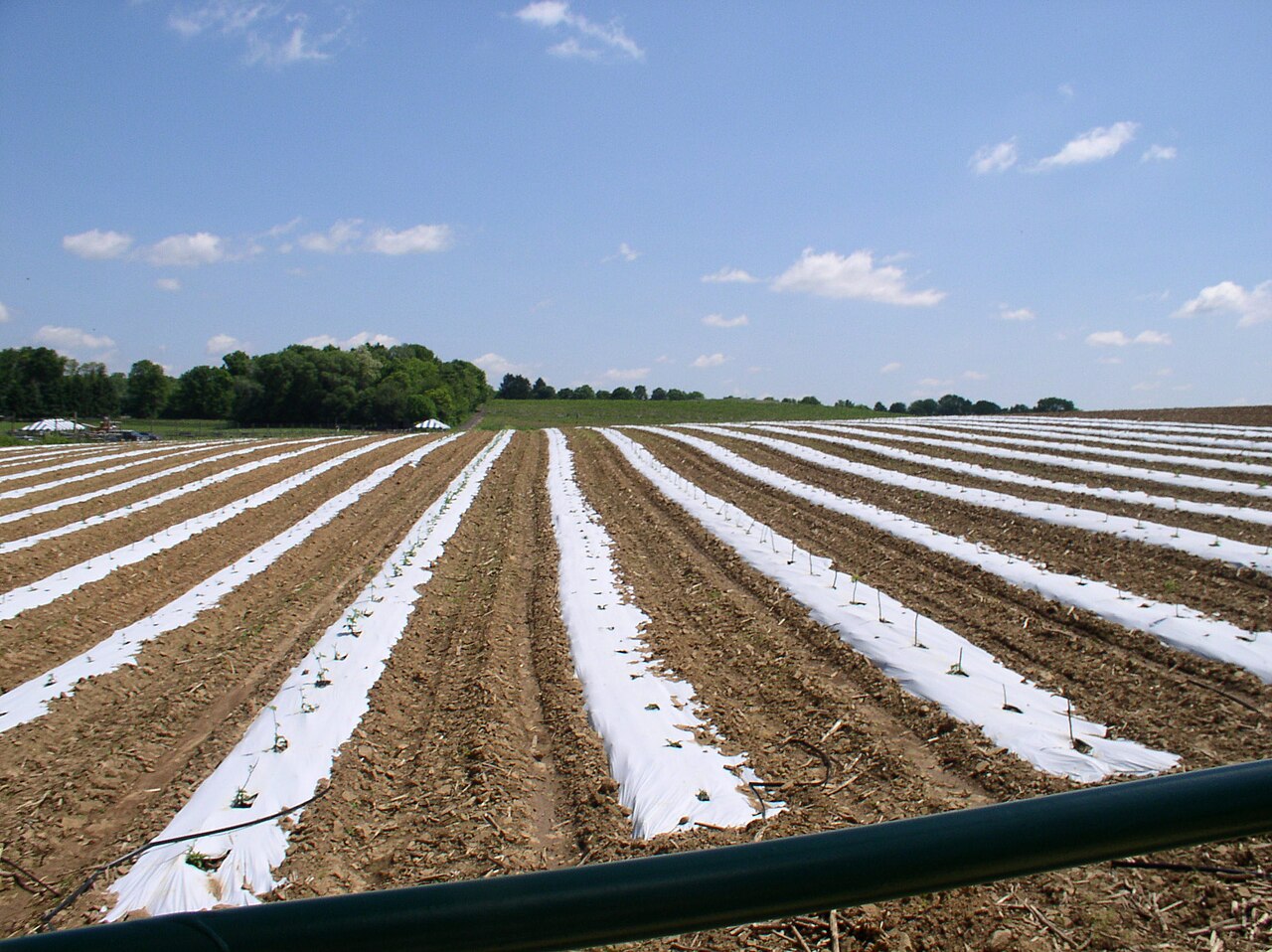
Cornell and Iowa State researchers reported that mesotunnels greatly reduced cucumber beetle populations in organic muskmelon trials and reduced bacterial-wilt damage. Their pollination treatments also mattered: removing and replacing covers, opening ends, or maintaining closed tunnels with managed pollinators changed pest exposure and yield. The barrier cannot be evaluated apart from flowering management.
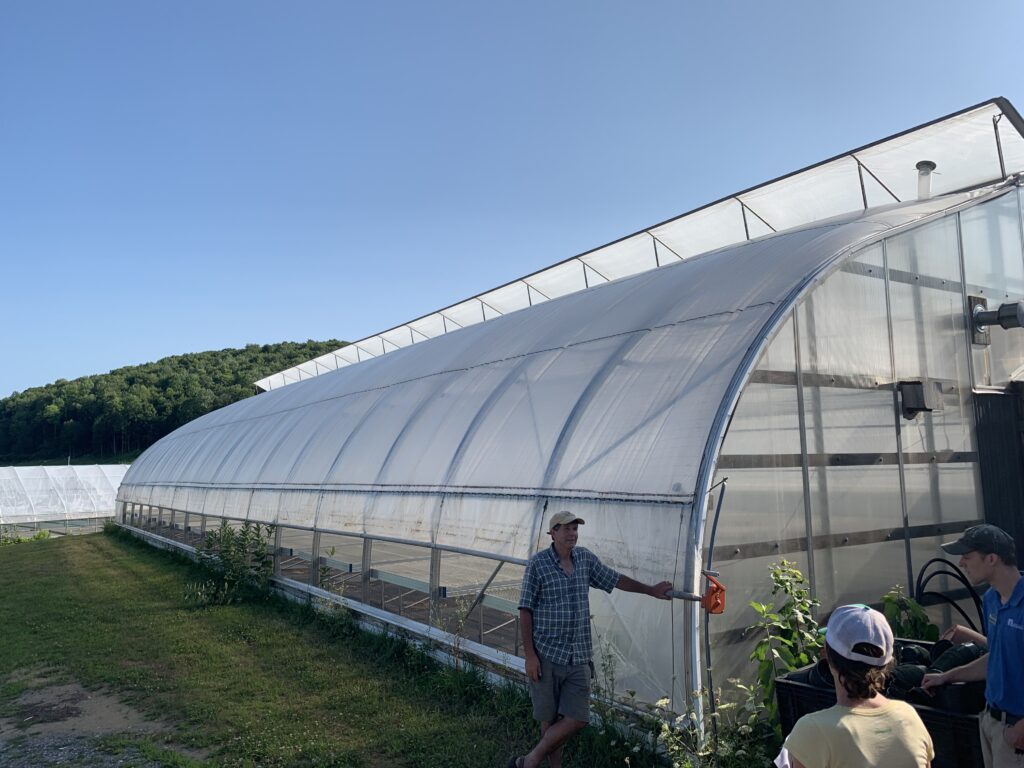
UVM’s berry work and guidance show that fine mesh can protect fruit from spotted wing drosophila when structures are well built and sealed. However, the investment includes posts or hoops, cables, doors, anchors, labor, repairs, and storage—not just rolls of netting. Results from New York melons or Northeast berries establish credible options, not a universal payback for every crop or region.
Plan pollination, heat, and access
Map bloom against pest arrival before setting the installation date. If the crop needs insects for pollination, decide whether to open the cover at flowering, open ends for a limited period, use a suitable managed pollinator, or grow a cultivar that does not require pollination for fruit set. Each choice changes labor, pest risk, and cost. Do not place a hive in a closed system without crop- and pollinator-specific guidance.
Monitor temperature and crop growth under the material, especially in hot or humid regions. Build enough height and width to keep foliage from pressing against mesh and to allow scouting and harvest. Doors and end closures deserve the same attention as the main sheet. Soil-emerging or previously enclosed pests require another control tactic because the barrier may protect them from natural enemies.
- Install before the target pest enters.
- Inspect seams, doors, ground edges, and tears on a schedule.
- Set a documented pollination plan before bloom.
- Scout inside; exclusion does not replace crop monitoring.
Trial a complete bay or bed
Compare covered and uncovered areas, or the netted system with the farm’s current integrated pest-management program. Record pest counts, disease incidence where relevant, marketable yield, culls, pollination defects, labor, repairs, and any spray changes. A fabric that reduces pests but delays harvest or raises culls may not improve the farm result.
Get quotes for the complete structure and use a conservative service life. Wind and snow loads, deer, machinery, ultraviolet exposure, and repeated handling can shorten it. Confirm that any material or pest-control practice is compatible with organic certification. After the trial, calculate the value of recovered marketable crop and avoided treatments against annualized structure and labor cost.
Sources & context
- Optimizing organic muskmelon production by integrating mesotunnel row covers Source date: 2024-12-12 · Accessed 2026-09-19
- Exclusion Netting for Spotted Wing Drosophila Source date: 2022-05-10 · Accessed 2026-09-19
- Frames to Support Exclusion Netting over Blueberries Source date: 2024 · Accessed 2026-09-19
Site publication date: unset. Research and source dates are kept separate. Confirm material use with your certifier and local extension service.
Your follow-up list
Saved in this browser only.