Key sources checked 19 September 2026. Extension-based decision guide with clearly labeled editorial examples; not an independent farm trial. This is a local review edition.
Keep these questions close.
- Separate circulation from ventilation.
- Check the inlet-to-outlet path and obstructions.
- Keep temperature measurements in a meaningful crop context.
A moving leaf tells you that air is moving at that leaf. It does not establish that hot air is leaving the structure or that conditions are similar at the other end. UVM's ventilation guidance distinguishes circulation inside a growing space from air exchange with the outside. That distinction is the starting point for a useful tunnel heat plan.
Draw where air enters and leaves
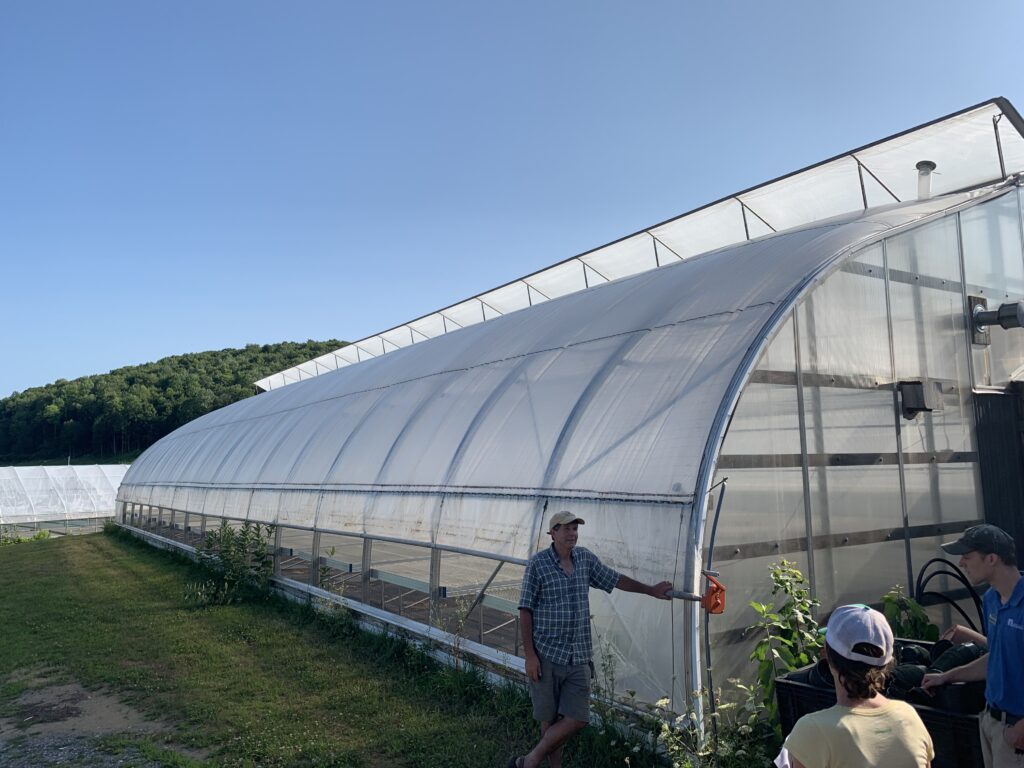
Sketch side openings, doors, high vents, fans and permanent obstructions. Include crop rows and screens that may influence the path. Ask what actually connects an inlet to an outlet under the conditions you commonly experience. A nominal opening area is not a complete description of working ventilation.
UMN's hot-weather guidance considers roll-up sides, high openings and shade as parts of a strategy. It does not make a single layout suitable for every structure or climate. Follow structural and equipment requirements when considering alterations. Secure moving parts and do not compromise the structure to create an improvised opening.
Observe more than the easiest location
Put temperature measurements in a documented relationship to the crop and follow sensor instructions for shielding and placement. A sensor heated by direct sun may not represent air temperature as intended. A single reading beside an open door can miss conditions deeper in the tunnel. Keep location and time with each observation.
For a hypothetical comparison, record the same locations before and after one operational change under reasonably comparable conditions. Note outside weather, vent positions, crop size and any shading. Do not attribute a cooler afternoon entirely to a fan adjustment if cloud cover changed at the same time. This is a management check, not an independent product trial.
Give circulation a defined role
Internal fans may help move air through areas with poor circulation, but they do not automatically supply outside air. Check whether equipment is intended for circulation or exhaust and whether the overall system provides the required replacement air. Match electrical installation and maintenance to the wet, working environment through qualified support.
Keep fans, cords and moving equipment clear of routine crop work. Record who checks operation and how failures are noticed. A system that depends on someone opening a sidewall each morning needs a backup routine for absence or unexpected weather. Automation also needs inspection; a controller status is not proof that an opening moved.
Treat shade and water as separate decisions
Shade changes the light environment as well as heat load. Choose it with the crop, season and local advice in mind instead of copying a percentage from an unrelated farm. Irrigation decisions should use crop and root-zone information, not simply increase because the structure feels hot to a person.
Connect this plan with moisture monitoring and the tunnel input audit. Record practical limits: labor for opening and closing, power availability, wind exposure, screen maintenance and the cost of equipment upkeep. The goal is a readable operating plan that separates air exchange, circulation, shade and irrigation, so a crew can adjust the right part of the system when conditions change.
Sources & context
- Ventilation in Greenhouses and High Tunnels · UVM Extension Source date: 2019-08-14 · Accessed 2026-09-19
Air exchange versus circulation; dead spots and sensor placement. Historical payback excluded.
- Prepare your high tunnel for a hot summer · UMN Extension Source date: 2024-04 · Accessed 2026-09-19
High openings, roll-up sides and shade planning. Historical price examples excluded.
- Irrigation strategies for vegetables · UMN Extension Accessed 2026-09-19
Root-zone monitoring and crop-specific irrigation; separate tunnel and open-field conditions.
New editorial synthesis from the sources above. No earlier site edition or field trial is implied.
Site publication date: unset. Research and source dates are kept separate. Confirm material use with your certifier and local extension service.
Your follow-up list
Saved in this browser only.