Key sources checked 19 September 2026. Extension-based decision guide with clearly labeled editorial examples; not an independent farm trial. This is a local review edition.
Keep these questions close.
- Measure available flow under working conditions.
- Keep pressure, flow and application volume separate.
- Group beds around a manageable irrigation decision.
An irrigation system is more than its emitters. A roll of tape cannot tell you whether the source can supply the beds, whether the far end receives enough pressure, or whether two crops belong on the same schedule. Draw the zone before ordering components. The result should explain what operates together and how you will know it is working.
Begin with the supply and the field
Record the water source, measured available flow, elevation changes, delivery distance and any existing pump or regulator information. Flow measured from an unrestricted outlet is not necessarily what remains at the pressure the installed system requires. Ask a qualified irrigation supplier or designer to evaluate that working point rather than matching components from unrelated catalog claims.
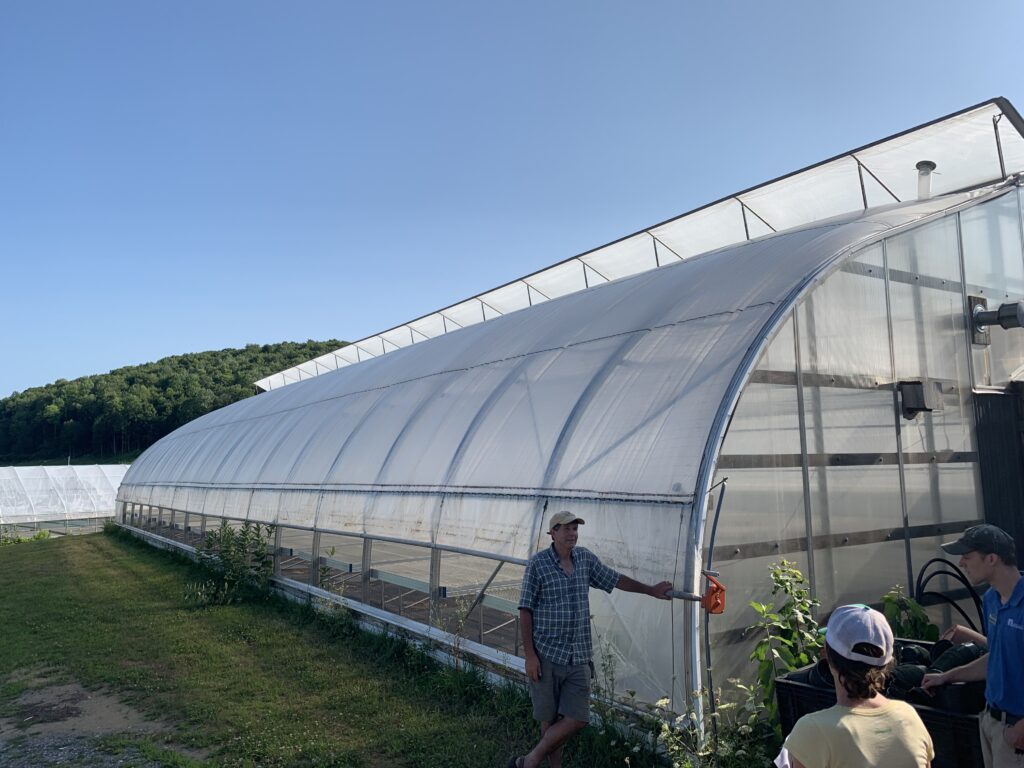
On the field sketch, identify bed lengths, slopes, access routes and where water must cross traffic. Mark the crops and the blocks likely to need separate decisions. A tunnel and an outdoor planting may share plumbing without sharing exposure to rainfall. UMN's irrigation guidance makes these field conditions part of the choice of delivery system.
Give each zone a coherent job
Group beds that can reasonably run together, considering crop, rooting pattern, soil and production stage. A zone that is convenient to install may be inconvenient to manage if it combines seedlings with mature crops on different soils. This is a planning consideration, not a claim that every crop needs a separate valve.
For a hypothetical farm with twelve beds, sketch two possible layouts: one valve serving all twelve, and several smaller groups. For each, ask whether the source can supply the simultaneous demand and how many valve changes the crew can realistically manage. Do not choose a design from the bed count alone. Confirm the actual components, line lengths and pressure requirements.
Read discharge units carefully
An emitter's flow, a tape's flow per length and a whole zone's measured flow are different quantities. Preserve the manufacturer's units in the design notes. If the specification is per length, calculate the installed total length before estimating demand. Do not multiply an emitter value by bed area and call it a system flow rate.
Penn State's drip guide treats filtration, pressure regulation and maintenance as working parts of the system. Select these for the water source and component specifications. Include access for inspection and the manufacturer's flushing procedure. This guide does not provide a universal pressure setting, filter size or chemical treatment recipe.
Commission before relying on the schedule
Label valves and record which beds each serves. Run a new zone, inspect leaks and compare discharge at several locations using a uniformity check. An apparently wet surface at the inlet does not establish delivery at the far end.
Use the water-volume worksheet to connect an explicitly chosen area and depth to a volume. It does not decide how much the crop needs. Combine the system record with root-zone observations, weather and local crop guidance. Keep the design sheet with repairs and seasonal changes so the next operator inherits an understandable system, not a puzzle of unlabeled valves.
Sources & context
- Drip Irrigation for Vegetable Production · Penn State Extension Source date: 2016-02-23 · Accessed 2026-09-19
Filtration, operating pressure, discharge units and maintenance; no generic pressure or runtime recommendation.
- Irrigation set-ups for specialty crops · UMN Extension Accessed 2026-09-19
Different delivery systems and design requirements; field-specific suitability.
- Irrigation strategies for vegetables · UMN Extension Accessed 2026-09-19
Root-zone monitoring and crop-specific irrigation; separate tunnel and open-field conditions.
New editorial synthesis from the sources above. No earlier site edition or field trial is implied.
Site publication date: unset. Research and source dates are kept separate. Confirm material use with your certifier and local extension service.
Your follow-up list
Saved in this browser only.