Key sources checked 19 September 2026. Practical extension framework; vendor prices intentionally excluded as volatile. This is a local review edition.
Keep these questions close.
- Measure bed geometry and labor bottlenecks before choosing brands or budget tiers.
- Add precision tools when repeated use, calibration, and spare-parts access support them.
- Use current written quotes and compare ownership with rental, custom work, or shared equipment.
Start with the production map
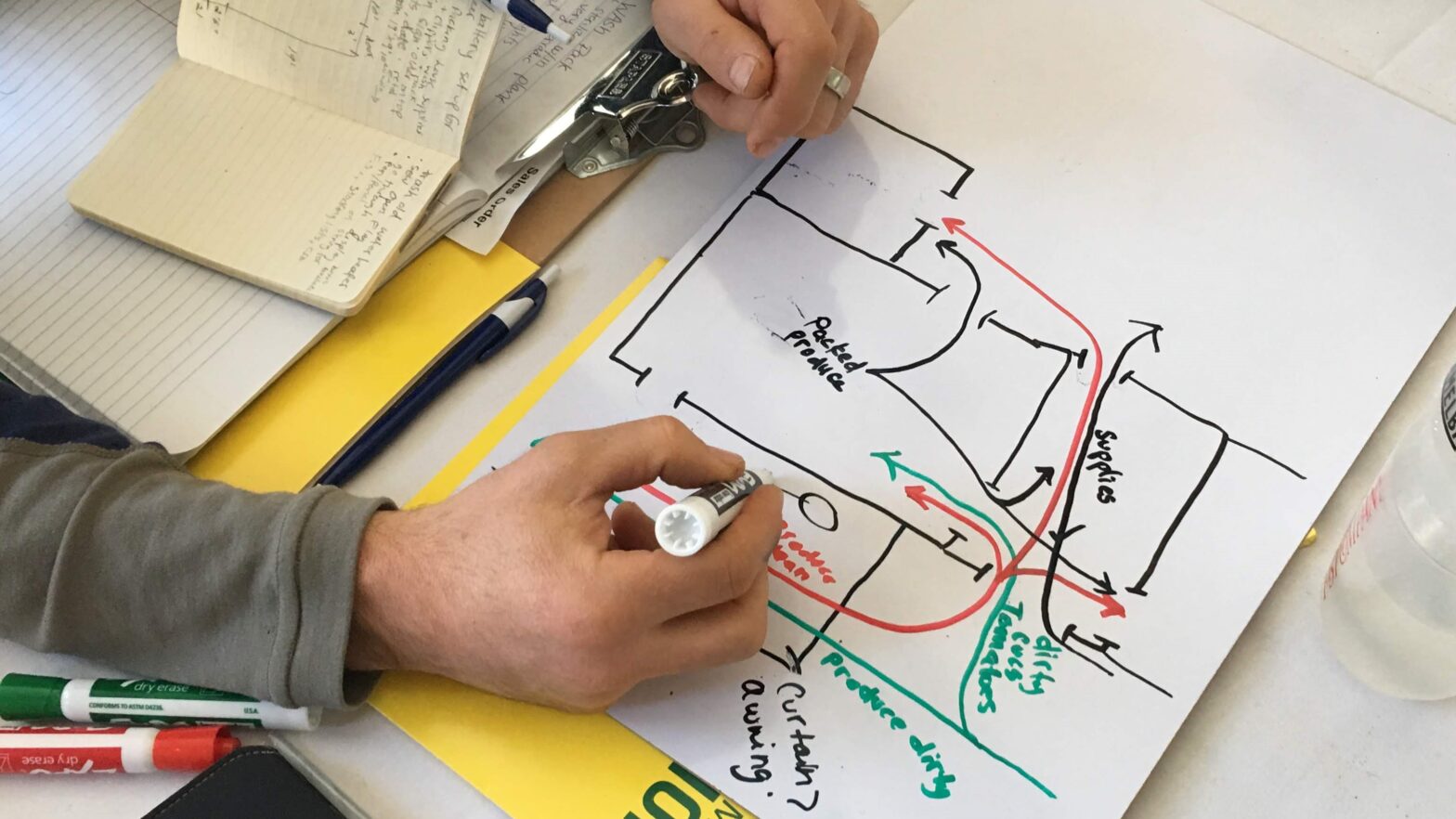
A useful tool kit begins with standardized beds, paths, rows, crops, and harvest flow. Measure widths before buying a seeder, wheel hoe, tarp, cart, or tractor implement. Penn State’s small-farm seeding guidance makes the same connection: crop spacing has to leave room for the weed-control tools the farm will actually use. A precise seeder is not useful if its rows cannot be cultivated.
Track labor for several weeks and rank jobs by hours, timing pressure, physical strain, and effect on crop quality. Bed preparation may feel important, while washing, harvest transport, or cooler access is the real bottleneck. Buy the tool that changes a measured constraint. A famous grower’s kit is evidence about that grower’s system, not a universal starter pack.
Stage one: reliable hand-scale flow
For a small startup, prioritize safe, repairable basics: digging or spading fork suited to the soil, rake, hoes matched to row spacing, shovel, pruners, harvest knives, buckets or crates, scales, irrigation repair tools, and cleaning and sharpening supplies. Washington State University notes that small gardens can be managed with a short basic list; market sales add harvest, wash-pack, and record needs, but do not erase the value of simplicity.
A broadfork, wheel hoe, or opaque tarp belongs in this stage only if the bed system and labor log justify it. Comfort matters: handle length, weight, grip, and body position determine whether a durable tool is actually used. Borrow or demo specialty tools first. Budget for replacement blades, files, storage, sanitation, and spare irrigation parts rather than spending the full amount on headline equipment.
Stage two: precision where repetition pays
A push seeder earns attention when repeated direct-seeding consumes labor or poor placement creates thinning and stand problems. Penn State recommends matching equipment to scale, finances, and style and calibrating a hand seeder before field use. Evaluate seed range, metering parts, depth control, soil preparation needs, cleaning, and local access to spares—not brand reputation alone.
Likewise, add cultivation attachments only after row spacing is stable. Add harvest carts when carrying time is measured, and improve cooling when product temperature and turnover show a quality loss. Record the baseline and expected time saved, then review after a season. A cheaper tool used every week can outperform a larger purchase that waits for one narrow job.
- Standardize bed and row dimensions before choosing equipment.
- Calibrate seeders for each seed lot and field condition.
- Stock wear parts for tools used in time-critical windows.
- Count cleaning, setup, changeover, and storage time.
Stage three: mechanize the verified bottleneck
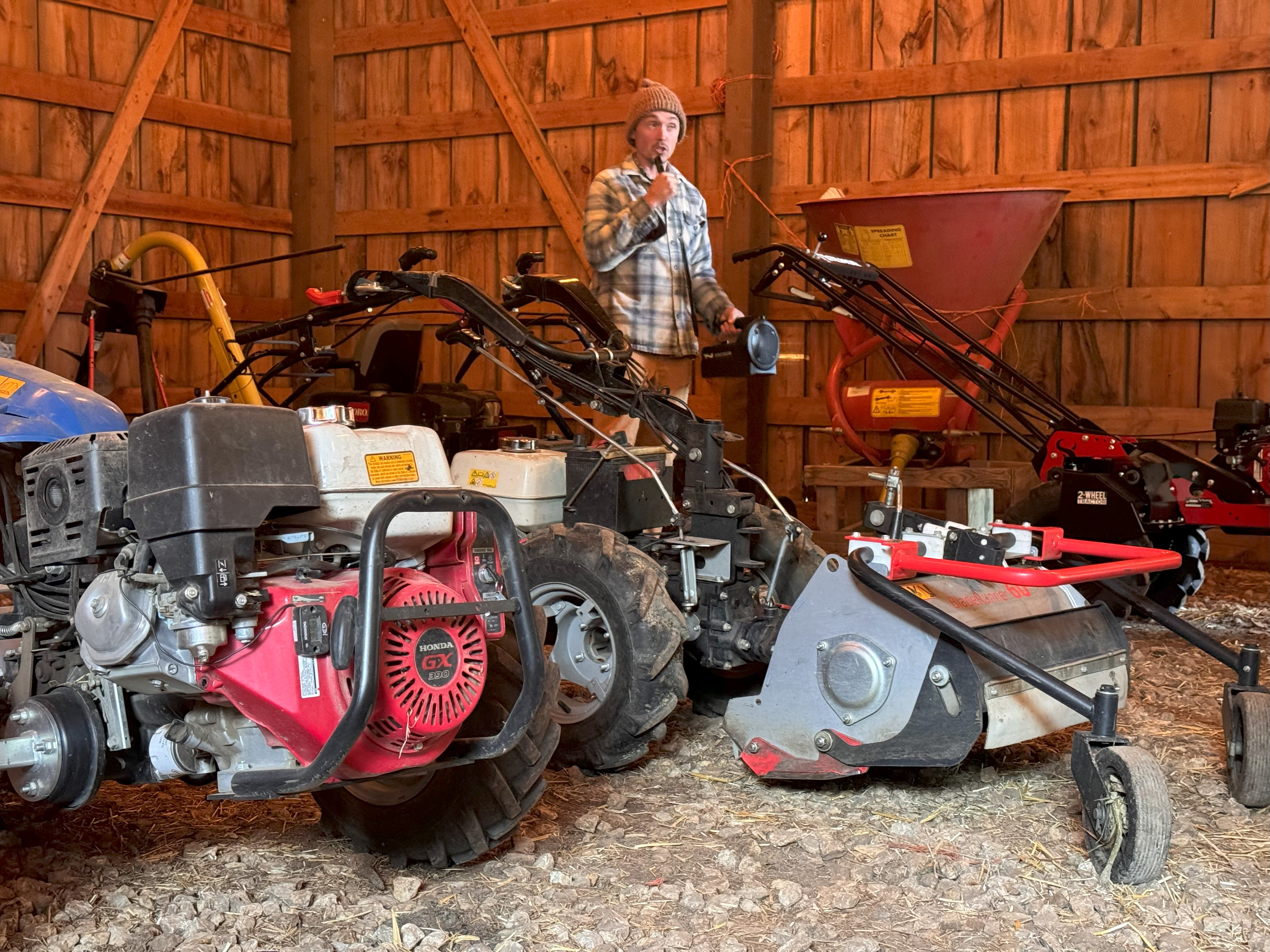
When acreage, sales, and labor records support it, compare powered cultivation, bed preparation, transplanting, harvest handling, and cooling. North Carolina State’s market-garden guide links equipment choice to crop mix; a salad-focused farm may justify precision seeding earlier than a transplant-heavy farm. Use the same logic for a two-wheel tractor, compact tractor, paperpot system, or expanded cooler.
Build three budgets rather than three shopping carts: minimum cash, balanced labor-saving, and expansion. For each, list purchase price from current written quotes, shipping, accessories, infrastructure, financing, annual repairs, storage, training, and expected hours. Keep publication-era vendor prices out of the long-term plan because they age quickly. Confirm organic-record requirements with the certifier and choose software only after defining which records must be captured in the field.
Use a gate before every purchase
Require four answers: which logged bottleneck changes, whether the tool fits the farm’s dimensions, who will maintain it, and what result will be reviewed after the season. For costly or infrequently used equipment, compare rental, a tool library, custom work, or a neighbor agreement. Shared access also provides a low-risk trial before ownership.
Avoid projecting gross-sales stories as repayment evidence. Use the farm’s conservative crop margin and realistic hours saved. A purchase can still be worthwhile for safety or workload even when its direct payback is slow, but name that reason. The aim is a coherent production system with fewer delays and injuries, not the longest inventory.
Sources & context
- Selecting the Right Seeding and Transplanting Strategies Accessed 2026-09-19
- Market Gardens for Small Farms in North Carolina Source date: 2021-07-13 · Accessed 2026-09-19
- Home Vegetable Gardening in Washington Source date: 2013 · Accessed 2026-09-19
- Selecting the Correct Garden Tool for the Job Source date: 1992-03-18 · Accessed 2026-09-19
Site publication date: unset. Research and source dates are kept separate. Confirm material use with your certifier and local extension service.
Your follow-up list
Saved in this browser only.