Key sources checked 19 September 2026. Extension-based decision guide with clearly labeled editorial examples; not an independent farm trial. This is a local review edition.
Keep these questions close.
- Match the tool’s action to the crop and weed stages.
- Check row geometry before working close to plants.
- Inspect effectiveness and crop damage before continuing.
The same cultivator can be useful one day and disappointing later. The difference may be weed size, crop anchorage, soil condition or adjustment rather than the implement's brand. Make the decision in the field. A recurring calendar appointment is a reminder to inspect, not proof that the crop is ready for a pass.
Identify the intended action
Ask whether the tool is meant to uproot, cut or bury the target weeds, and where that action occurs relative to the crop. An inter-row tool and an in-row tool have different tolerances. The SARE mechanical-management chapter makes timing increasingly important as work moves closer to the crop row.
Keep the crop's stage and the weeds' stage on the same note. Saying that the crop is two weeks old does not describe the size of the weeds or how firmly the crop is rooted. Look at the actual plants before selecting depth, aggressiveness or speed under the implement's instructions.
Check the geometry as a system
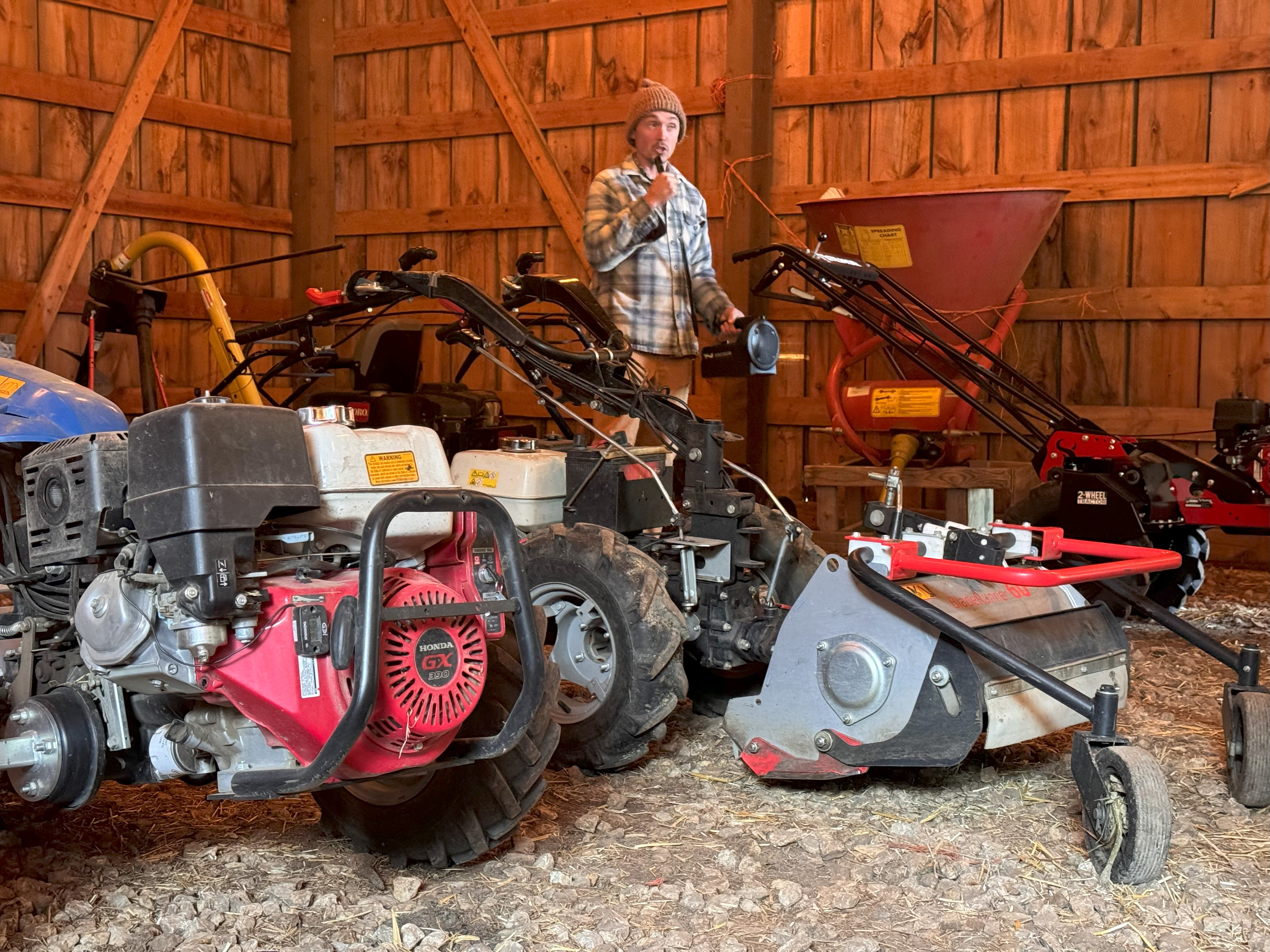
Row spacing, bed width, planter alignment and cultivator settings must agree. A tool that fits the center of the bed may still drift toward an outside row. Check adjacent passes and headlands, not only the straightest section. The existing equipment-selection guide helps frame machine choice; this is the field setup that follows it.
Inspect a small test section before committing to the field. Follow manufacturer safety procedures, stop and isolate moving equipment before adjustment, and keep people away from working implements. A close look is valuable only when it can be made safely.
Test what happened, not what looked busy
After the trial pass, check both weeds and crop plants. Were weeds actually displaced or cut? Were crop roots exposed or plants buried? Are results different in heavier soil or where residue collects? A dramatic plume of soil is not a measure of successful control.
In a hypothetical work record, log the block, tool, settings, crop stage, weed stage, soil condition and the reason for adjustment. Photograph the test area and revisit it to see which weeds survived. This creates a local setup history instead of an unsupported assertion that one machine always works best.
Protect the next opportunity
Weather and soil condition affect access and outcomes, so keep priorities explicit when several crops need attention. A crew cannot perform every operation at once. Crop establishment and earlier prevention influence how much rescue work is required; SARE's cultural-management discussion treats those practices as part of weed control, not separate from it.
Track time spent adjusting, transporting and cleaning equipment as well as time in the row. If hand finishing remains necessary, include it in the cost comparison. Repeated passes that damage the crop or miss the target stage may be less useful than changing the preceding sequence.
Connect the record to stale-seedbed planning and seeder calibration. The objective is not maximum cultivation. It is reliable control with tolerable crop damage, labor and soil disturbance under the conditions actually present.
Sources & context
- Manage Weeds on Your Farm, Chapter 4 · SARE Source date: 2021 · Accessed 2026-09-19
Stale versus disturbed seedbed; cultivation depends on weed/crop stage and soil/weather.
- Manage Weeds on Your Farm, Chapter 3 · SARE Source date: 2021 · Accessed 2026-09-19
Crop competitiveness and integrated tactics; uneven emergence complicates cultivation.
New editorial synthesis from the sources above. No earlier site edition or field trial is implied.
Site publication date: unset. Research and source dates are kept separate. Confirm material use with your certifier and local extension service.
Your follow-up list
Saved in this browser only.