Key sources checked 19 September 2026. Extension-based decision guide with clearly labeled editorial examples; not an independent farm trial. This is a local review edition.
Keep these questions close.
- Record the seed lot, coating and actual machine setup.
- Check delivery before judging field emergence.
- Manufacturer instructions take priority over a generic setting.
A seeder setting is a starting record, not a guarantee that every seed lot will meter the same way. Seed size, shape and coatings can affect delivery. Penn State's calibration guidance supports checking the actual seed being used; it does not provide a transferable setting for every vegetable seeder. Build a repeatable procedure around your machine's manual and the crop's planting objective.
Define what you want delivered
Write down the crop, variety, lot, coating, intended row arrangement and target seed placement from an appropriate crop plan. Keep germination information separate from the mechanical delivery target. Seed delivered, seed germinated and plants established are related but different counts. Confusing them makes it hard to identify where an uneven stand began.
For a hypothetical bed plan, first specify the intended row length and seed spacing, then calculate the corresponding delivery target. Do not start from a favorite gear or plate and assume the agronomic target will follow. This article intentionally supplies no universal seed rate or spacing recommendation.
Reproduce the setup on the record
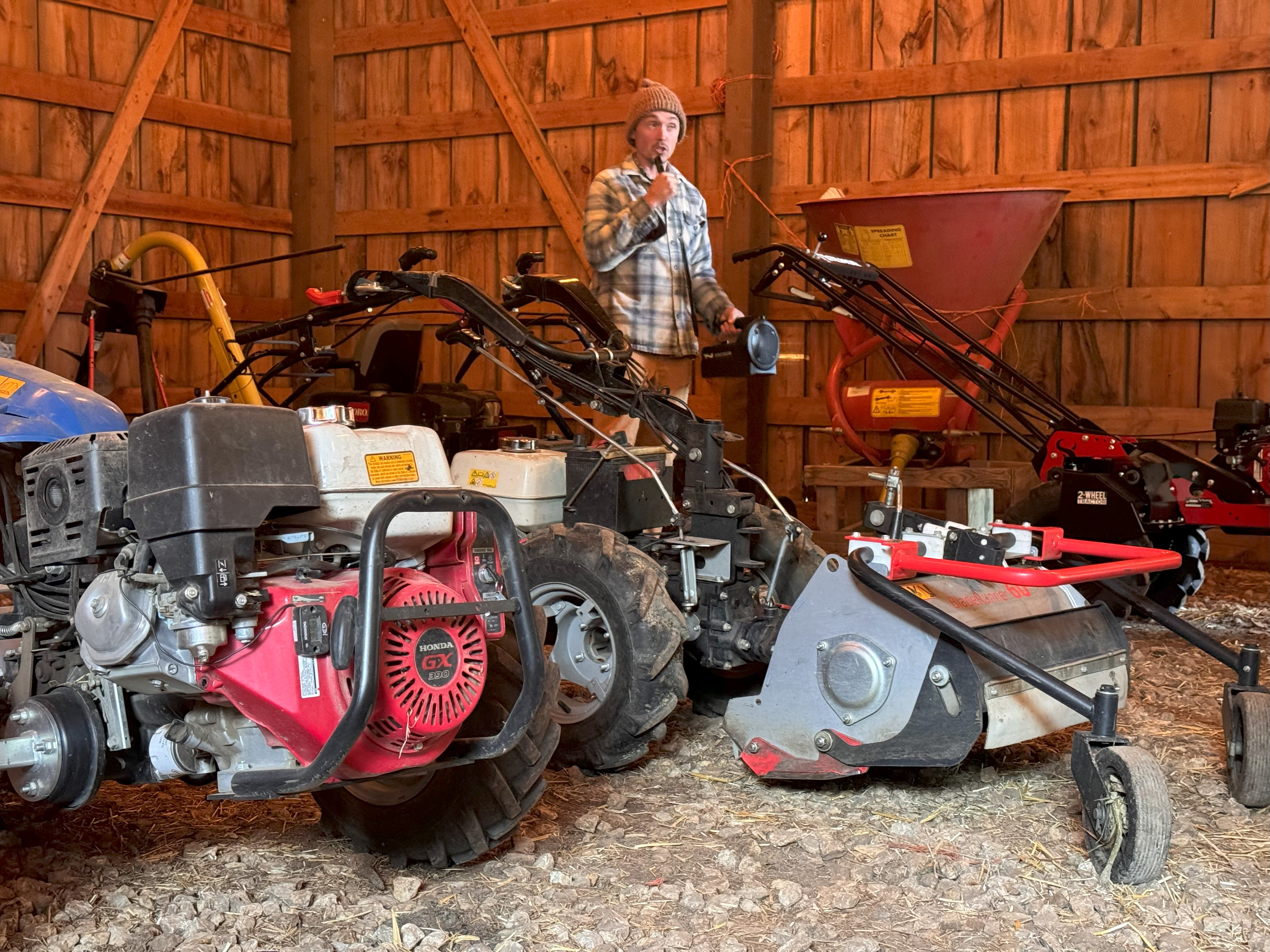
Record the plate or metering component, drive setting, depth arrangement and other relevant adjustments using the manufacturer's names. Photograph the setup if that helps another operator reproduce it. Check wear, debris and assembly under the manual's safety procedures. Stop and isolate equipment before inspecting or adjusting moving parts.
Use the manufacturer's calibration method to measure delivery over a known equivalent distance or operating cycle. Repeat the check enough to notice inconsistent delivery rather than accepting one convenient count. Keep the measured counts and test conditions. A tidy average can hide an intermittent blockage or a setup that alternates between gaps and excess seed.
Move from the bench to a short field pass
The field adds traction, soil condition and operating-speed effects that a stationary check may not reproduce. Inspect a small planted section using a safe procedure before committing to the whole block. Check placement and depth as well as count. Record the condition of the seedbed and the operator's adjustments.
SARE's cultural weed-management discussion makes crop establishment part of the broader weed-control system. An uneven stand can complicate later management, but the appropriate response depends on its cause. Connect the field pass to the cultivation plan so row geometry and machine clearances agree before plants emerge.
Keep emergence as a second observation
Revisit marked sections and record emergence separately from the calibration result. Weather, soil and seed condition may influence establishment after mechanically correct delivery. A poor stand does not automatically prove a metering fault, just as a successful bench test does not prove that field placement was correct.
Retain unsuccessful checks as well as the final setting. Note which seed lot and field conditions the record describes before reusing it next season. Penn State's vegetable-seeding article includes older equipment demonstrations; its displayed update date does not make those trials current product testing. No detailed machine setting or product endorsement is taken from them. Use the actual equipment manual and local crop guidance for the operational procedure. For a controlled comparison of settings, follow the on-farm trial guide rather than treating one pass as proof.
Sources & context
- Selecting the Right Seeding and Transplanting Strategies · Penn State Extension Source date: 2026-09-01 · Accessed 2026-09-19
Displayed update date; underlying equipment trials include 2010 observations. Full text retrieved on final review after initial browser retrieval limits. Calibration, consistent spacing and checking seed delivery; old prices and product endorsements excluded.
- Calibration of Grain/Seed Drills · Penn State Extension Source date: 2013-03-01 · Accessed 2026-09-19
Seed lots, coatings and seed size affect delivery. Full text reviewed; no grain-drill setting, seed rate or lifting procedure transferred to vegetable equipment.
- Manage Weeds on Your Farm, Chapter 3 · SARE Source date: 2021 · Accessed 2026-09-19
Crop competitiveness and integrated tactics; uneven emergence complicates cultivation.
New editorial synthesis from the sources above. No earlier site edition or field trial is implied.
Site publication date: unset. Research and source dates are kept separate. Confirm material use with your certifier and local extension service.
Your follow-up list
Saved in this browser only.