Key sources checked 19 September 2026. Extension-based decision guide with clearly labeled editorial examples; not an independent farm trial. This is a local review edition.
Keep these questions close.
- Map several flows, not just the produce path.
- Make cleaning access part of equipment selection.
- A layout is not a substitute for a food-safety plan.
A crowded wash/pack area can look like a shortage of tables when the deeper problem is an awkward sequence. UVM's planning guidance brings workflow, ergonomics and food safety into the same drawing. Before moving plumbing or buying equipment, trace how a real harvest lot moves from arrival to storage and how everything around it moves too.
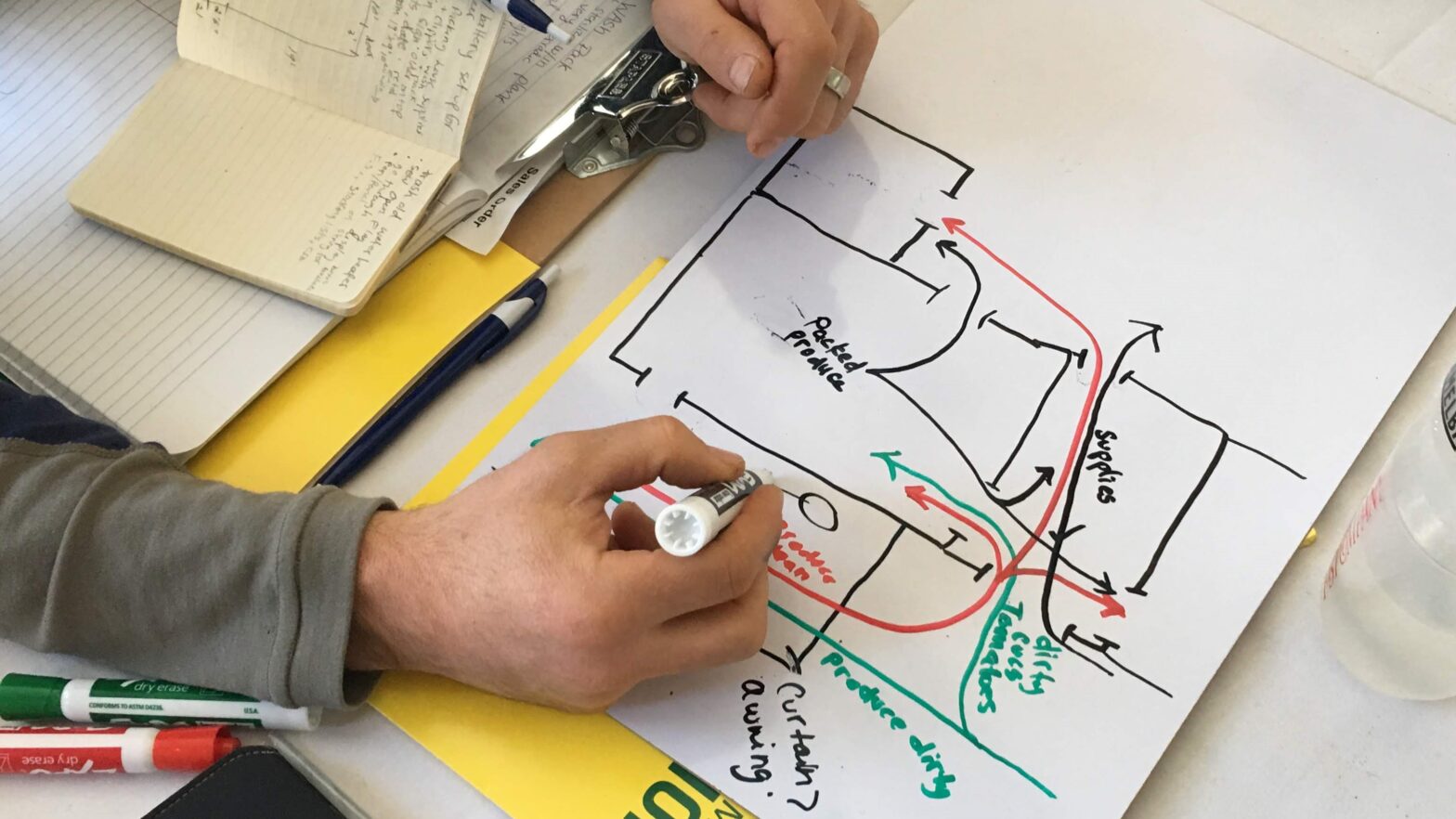
Draw the current day honestly
Use a simple floor plan with doors, drains, water, power and fixed obstacles. Trace incoming produce, field containers, cleaned containers, packed product, people and waste separately. Include temporary storage that becomes permanent during the busiest hour. The drawing should show what actually happens, not only the intended procedure.
Pick a representative crop and a peak-volume day. Where does it wait? Which loads have to be lifted twice? Does a worker carrying dirty field containers cross the route of finished product? A crossing identifies a question to address; it does not establish a quantified contamination risk or prove that a facility is compliant or noncompliant.
Test a proposed sequence at low cost
Mark a possible arrangement on the floor before committing to fixed equipment. Walk the route with empty containers and the people who do the job. Check door clearance, reach, turning space and access to controls. Keep emergency exits and required clearances unobstructed, and seek relevant professional advice before electrical or plumbing changes.
In a hypothetical redesign, placing clean packaging closer to packing may remove a repeated walk, but it is not an improvement if that location exposes it to splash or blocks cleaning access. Evaluate the whole process rather than celebrating a shorter line on the drawing. Record which problem each proposed move is meant to solve.
Inspect the surfaces you will have to clean
UVM's hygienic-design material emphasizes cleanability, including joints and spaces that can trap material. Look underneath a table, around attachments and behind equipment. Ask whether parts can be inspected, cleaned and dried according to the equipment and farm procedures. A shiny top surface does not describe the condition of hidden connections.
Distinguish cleaning from sanitizing in the written procedure, and use products only according to their labels and applicable requirements. This guide does not prescribe sanitizer concentrations or validate a wash-water treatment. Water quality, crop handling and legal requirements need their own documented review with appropriate food-safety support.
Follow the product into storage
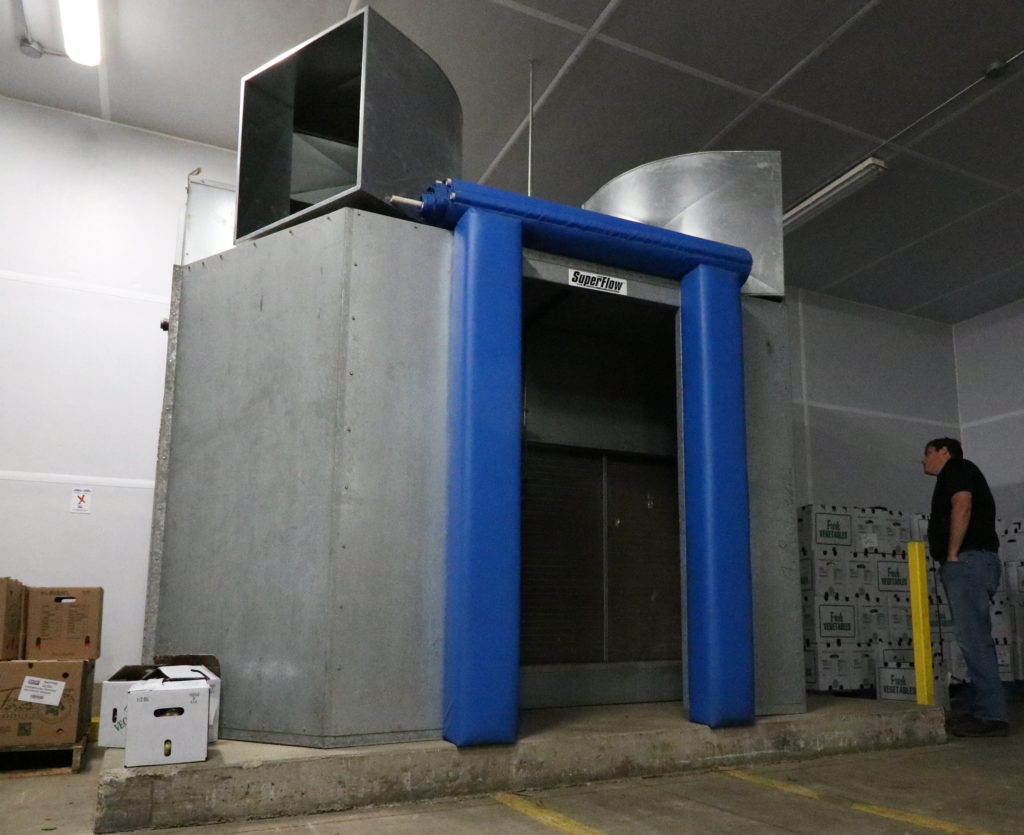
The layout is unfinished if packed produce has no practical route to suitable storage. Include the staging area, container vents and the time product waits before cooling. Read measure pulp temperature before assuming a cold-room thermostat describes the crop inside a full stack.
Keep a short revision record: old arrangement, proposed change, expected benefit and observed result. Measure steps or handling time if those are the reason for the change, and label observations as your farm's conditions rather than a universal performance claim. Connect the equipment list to the buy-or-hire cost guide. A useful layout makes the work easier to perform and easier to inspect without pretending that architecture alone replaces training, maintenance or a food-safety plan.
Sources & context
- Planning an Efficient and Safe Wash/Pack Area · UVM Extension Source date: 2020-02-09 · Accessed 2026-09-19
Process planning, flow, ergonomics and food safety together.
- Hygienic and Sanitary Design for Produce Farms · UVM Extension Source date: 2019-05-30 · Accessed 2026-09-19
Cleanable surfaces and inaccessible joints; layout cannot replace cleaning procedures.
- Safe, Easy, Low-Cost Produce Handling · UVM Extension Accessed 2026-09-19
Use-specific containers, handwashing, product transport and storage monitoring.
New editorial synthesis from the sources above. No earlier site edition or field trial is implied.
Site publication date: unset. Research and source dates are kept separate. Confirm material use with your certifier and local extension service.
Your follow-up list
Saved in this browser only.