Key sources checked 19 September 2026. Extension-based decision guide with clearly labeled editorial examples; not an independent farm trial. This is a local review edition.
Keep these questions close.
- Room air and product temperature are different observations.
- Air must reach the product through the package.
- Use crop-specific storage guidance, not one target for every harvest.
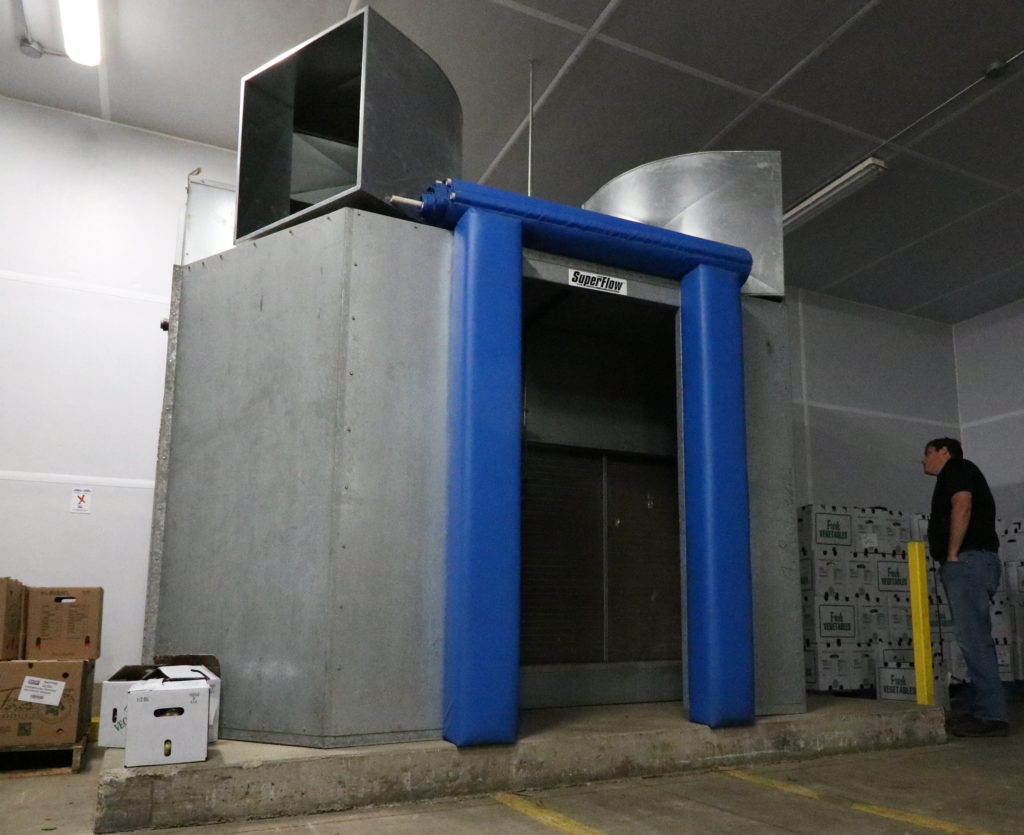
A cold room can reach its set point while recently harvested produce remains warmer inside a stack. UVM's forced-air cooling guidance focuses on moving air through packages to remove heat from the product. The practical question is therefore not only whether refrigeration is running, but how you know the crop itself is approaching the intended condition.
Start with the crop and the handling plan
Identify the crop, harvest condition, package and intended storage period. Obtain appropriate crop-specific temperature and humidity guidance; one target does not fit every product, and some crops are sensitive to excessive chilling. This page provides a measurement workflow rather than a universal storage-temperature chart.
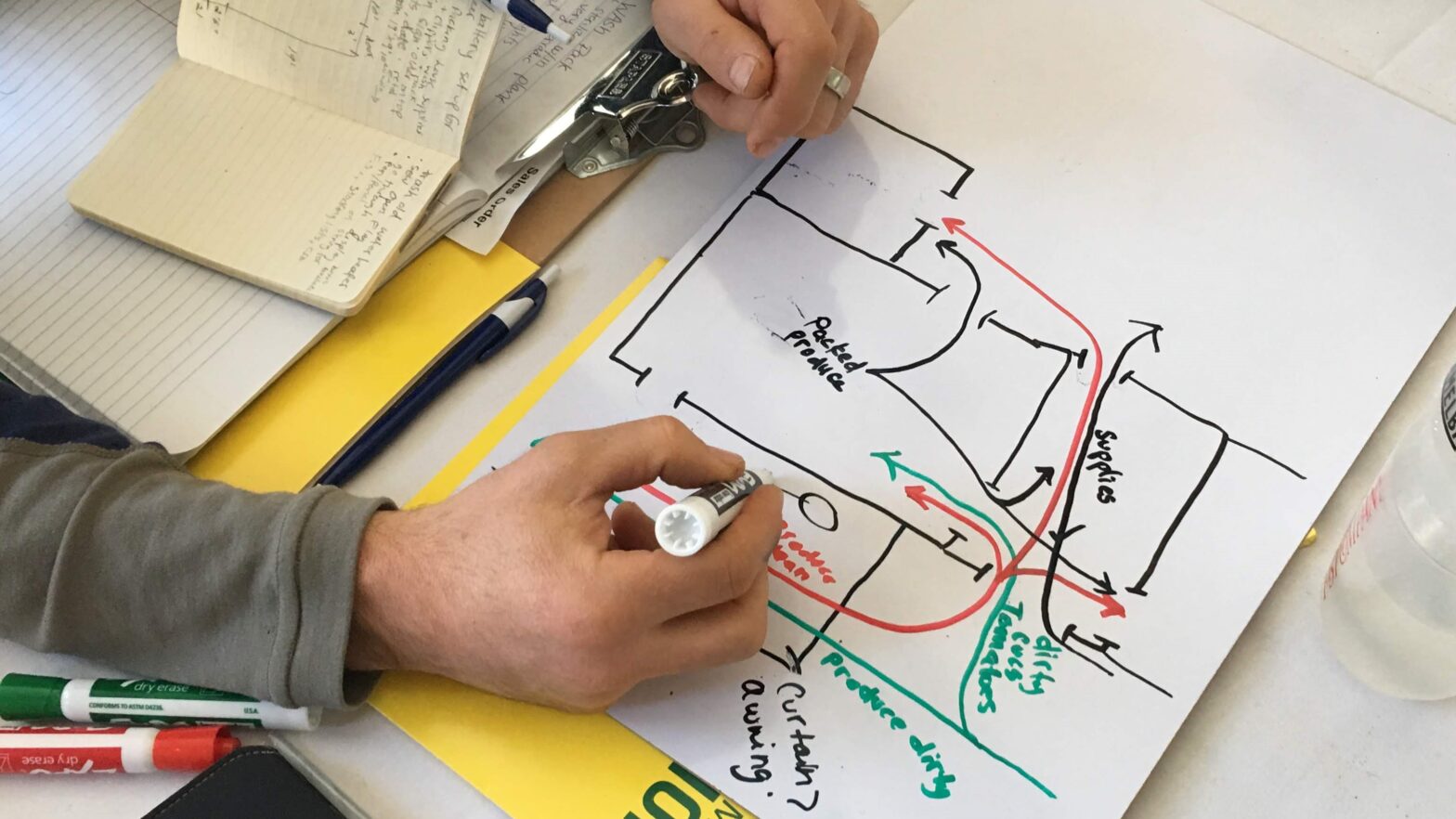
Record when a lot arrives, when cooling starts and where it is placed. Link the record to the wash/pack flow so waiting time is visible. A delay on a loading bench is part of the process even if the cooler works as designed once the product reaches it.
Measure the product deliberately
Use a suitable, maintained temperature instrument and a hygienic procedure appropriate to the crop. Record where the measurement was taken. A reading from a package near the door may not represent the center of a larger load. Follow relevant handling and food-safety guidance for any probe that contacts produce; do not introduce a new contamination route while collecting data.
In a hypothetical check, compare a documented location near the outside of a stack with one deeper in the load over time. Keep the container type, fill level and arrangement in the record. These observations can reveal a question about uneven cooling, but a few readings do not validate the entire cold chain or establish a shelf-life claim.
Follow the air through the package
Forced-air arrangements aim to move air through product containers rather than only around them. Check that vents line up with the intended flow path and that liners, stacking or overfilling do not defeat that path. UVM illustrates why packaging and loading are part of cooling performance, not details to consider after buying a fan.
Do not assume any fan placed beside a stack creates the intended pressure path. Equipment design, openings, bypass routes and refrigeration capacity need to work together. Use appropriate technical support when sizing or modifying a system, and protect people from moving parts, unsafe electrical arrangements and unstable loads.
Compare a change without inventing a result
If you alter stacking or airflow, keep before-and-after records with comparable crop loads and starting conditions where practical. Note important differences rather than hiding them in an average. A faster temperature drop in one trial is an observation under those conditions, not proof that the equipment always saves a stated number of hours.
Retain product and room readings separately, including times and instrument details. Review whether the process reaches the crop-specific objective within the farm's actual routine. Use the on-farm comparison guide when testing an investment and the record-export checklist when choosing a logging system. A meaningful cooling record follows the produce, not just the thermostat.
Sources & context
- Forced Air Cooling On The Farm · UVM Extension Source date: 2018-10-09 · Accessed 2026-09-19
Product temperature differs from room temperature; airflow must pass through packages.
- Safe, Easy, Low-Cost Produce Handling · UVM Extension Accessed 2026-09-19
Use-specific containers, handwashing, product transport and storage monitoring.
- Planning an Efficient and Safe Wash/Pack Area · UVM Extension Source date: 2020-02-09 · Accessed 2026-09-19
Process planning, flow, ergonomics and food safety together.
New editorial synthesis from the sources above. No earlier site edition or field trial is implied.
Site publication date: unset. Research and source dates are kept separate. Confirm material use with your certifier and local extension service.
Your follow-up list
Saved in this browser only.