Prepared in the supplied September 2026 research pack. This draft has not been reverified in this pass. Rules, prices, company status, and numerical claims may need correction.
Keep these questions close.
- Read this as a draft from the supplied research pack.
- Follow the linked sources and check current rules before acting.
- Ask how the evidence fits your region, crop, and scale.
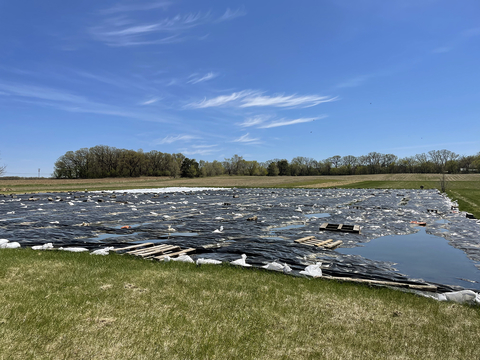
Picture pulling up a field of black plastic in October. It is torn, caked with soil and headed for a landfill. A mulch you could simply till in sounds like the obvious fix, and the USDA organic regulations even list "biodegradable biobased mulch film" as an allowed material. So why can't certified organic growers buy one?
The short answer is that the rule sets a bar no commercial product currently clears. As of September 2026, extension researchers report that no soil-biodegradable mulch on the market meets National Organic Program (NOP) requirements. The fix has been stuck between the National Organic Standards Board (NOSB) and the NOP since 2021.
This post explains what the regulation requires, where products fall short, how the policy process stalled, and what organic growers can do this season while they wait.
Key takeaways
- The NOP allows petroleum-based plastic mulch (not PVC) only if it is removed at the end of the season. It also lists biodegradable biobased mulch film as a separate allowed material.
- To qualify, a biodegradable film must meet compostability and soil-biodegradation standards and be 100% biobased. As of 2026, no commercial product meets that last test.
- In 2021 the NOSB recommended lowering the biobased requirement to 80%. In 2023 the NOP declined, noting that available products were under 50% biobased.
- We could not confirm that a revised recommendation has been adopted as of September 2026. Check the latest NOSB agendas.
- Biodegradable films carry trade-offs too: higher purchase prices and open research questions about residues in soil.
- Before you lay any mulch, ask your certifier whether that exact product is allowed in your Organic System Plan.
What the organic rules actually say
Two sections of the federal organic regulations matter here.
The National List entry
The National List of synthetic substances allowed in organic crop production, 7 CFR 205.601, includes two relevant entries:
- "plastic mulch and covers (petroleum-based other than polyvinyl chloride (PVC))", which must be removed at the end of the growing or harvest season;
- "biodegradable biobased mulch film", which is meant to stay in the field and break down.
The first entry is why conventional polyethylene (PE) mulch is common on organic farms. The second is why many growers assume biodegradable film is already approved.
The definition that does the real work
The term is defined in 7 CFR 205.2. According to the regulation and a January 2026 summary from Washington State University (WSU) small fruit extension, a qualifying film must:
| Requirement | Standard(s) named |
|---|---|
| Be compostable | ASTM D6400, ASTM D6868, EN 13432, EN 14995 or ISO 17088 |
| Biodegrade at least 90% in soil | ISO 17556 or ASTM D5988 |
| Be 100% biobased | Measured by ASTM D6866 |
The compostability and soil-biodegradation tests are achievable. The sticking point is the third row. A film that is 100% biobased contains no fossil-derived carbon at all.
Why no product qualifies (as of September 2026)
WSU's January 2026 publication states that "currently no commercially available BDM product meets the NOP requirements for organic production," because none uses 100% biobased feedstock.
That matches what the NOP itself said in a September 9, 2023 memo to the NOSB. The memo noted that "80% biobased BBMF products are not available. Only <50% biobased BBMF products are commercially available."
In practice, soil-biodegradable mulches sold today blend biobased and fossil-based ingredients. They may break down well in soil and pass compostability tests, but they fall short of the biobased threshold. The rule demands one kind of feedstock and the market makes another.
A labeling point to watch: a supplier may describe a film as "biodegradable," "compostable" or "bio-based" and be accurate on each count. None of those words tells you whether the film meets the NOP definition.
How the policy fix stalled
| When | What happened |
|---|---|
| Fall 2021 | The NOSB recommended lowering the biobased requirement to 80%. |
| Sept 9, 2023 | The NOP said it "will not implement the 2021 recommendation as is," because no 80% biobased products existed either. |
| 2023 memo | The NOP asked the NOSB for a revised recommendation, answering seven questions, by Spring 2025. |
| Jan 13–14, 2026 | The Organic Farmers Association's summary of the NOSB meeting does not mention mulch film. |
The NOP's seven questions go to the heart of the issue. They include whether a biobased requirement is needed at all, and whether a film needs to be both compostable and soil-biodegradable.
In other words, the agency was not just asking for a different percentage. It was asking the Board to rethink what the definition is for.
What we do not know. We could not confirm whether the NOSB adopted a revised biodegradable mulch recommendation in 2025 or 2026. At its January 2026 meeting, the Board did vote against allowing compostable polymers as a compost feedstock. That is a separate question from mulch film, but it hints at continuing caution about synthetic polymers entering organic soils. Check the NOSB Spring and Fall 2026 meeting materials for updates.
For wider context, the NOP's January 2026 update to the NOSB said a National List proposed rule had been drafted and was under review. That update does not say whether mulch film is part of it, so do not assume it is.
The case for caution, and the case for change
There are fair arguments on both sides.
Why regulators hesitate
- Residues are not fully understood. Recent studies have raised concerns about biodegradable film residues in soil, including one titled "The Ecological Trap: Biodegradable Mulch Film Residue Undermines Soil Fungal Network Stability" (2025) and a 2025 field comparison of polyethylene and biodegradable residues on soil microbes and rapeseed. We have not reviewed their full results, but their existence means biodegradable mulch is not automatically harmless.
- Standards differ. Europe's soil-biodegradable mulch standard, EN 17033, requires at least 90% biodegradation within 2 years under controlled aerobic soil conditions. It also requires ecotoxicity tests on plants, invertebrates and microorganisms, and limits on heavy metals. According to a 2025 HortTechnology review, EN 17033 is not among the standards named in the NOP definition.
Why growers want a path
- Polyethylene has its own waste problem. The HortTechnology review reports that "nearly all PE films" are "burned, buried, stockpiled, or landfilled." Recycling is hampered by soil contamination and tearing during removal.
- Cost may even out. Biodegradable mulch costs about 1.5 to 2 times as much as PE to buy. Once you count the labor and disposal of removing PE, total costs can be comparable, the same review notes.
- Microplastic accumulation differs. A 2026 meta-analysis of 12 studies found polyethylene films accumulated 2.3 times more microplastics in soil than biodegradable films. The study base is small, so treat that as a signal rather than a settled figure. Our post on plastic mulch and microplastics covers this research.
What organic growers can use now
Until the rules or the products change, certified organic growers have a few options. Every one of them should be written into your Organic System Plan and cleared with your certifier.
Option checklist
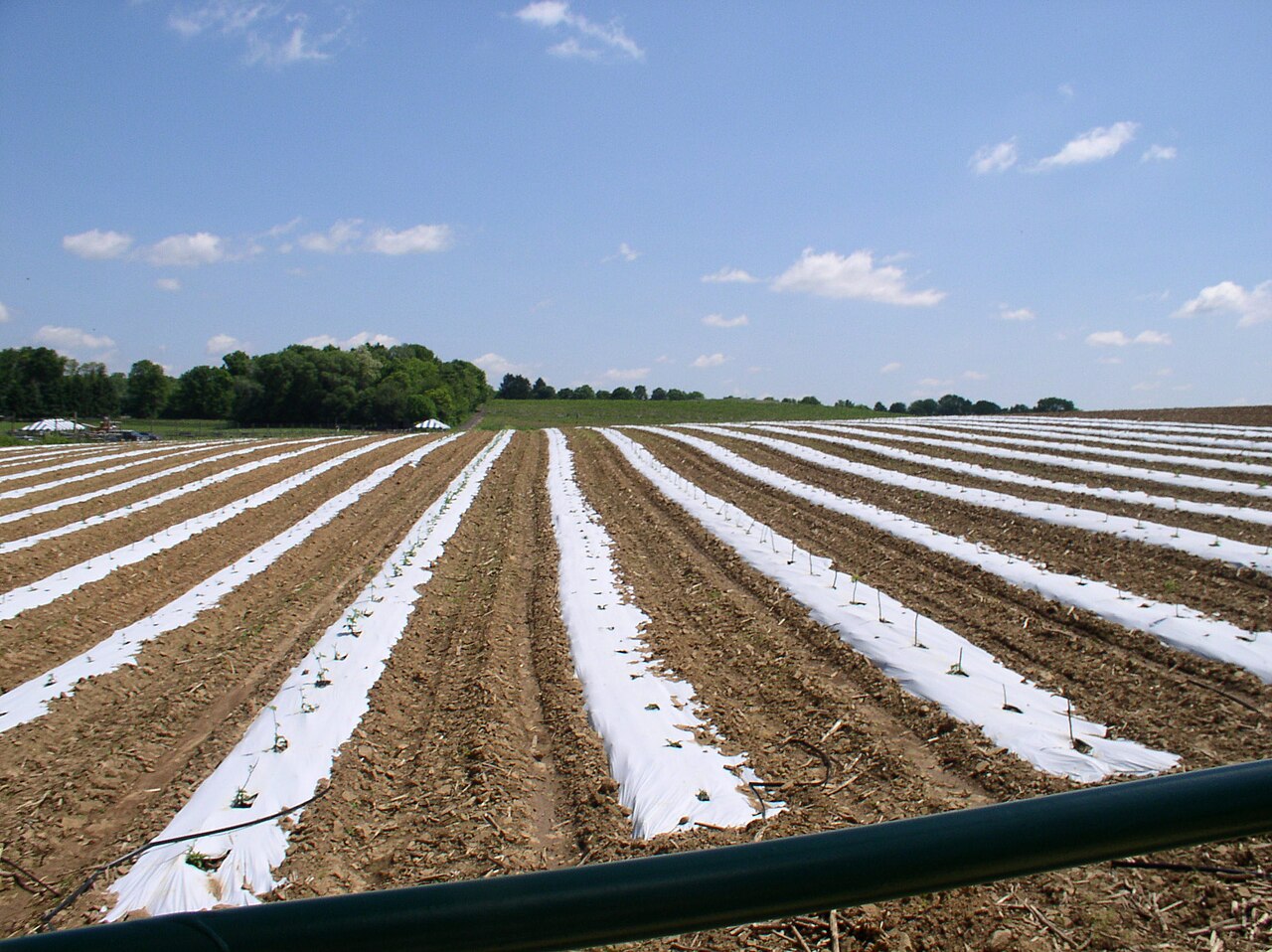
- Petroleum-based plastic mulch (not PVC), removed each season. This is allowed under 205.601. Plan the removal labor and disposal route before you lay it.
- Reusable silage tarps for weed suppression before planting. Cornell trials found 96% less weed biomass in tarped plots, and a tarp can last many years. See our silage tarp guide.
- Reusable woven or heavy films across several seasons, where your system allows, to reduce single-use waste. Confirm material and removal requirements with your certifier.
- Non-plastic mulches. Paper mulches are a possible option, but we did not gather performance or cost data for this article. Ask your extension office for local trial results and your certifier about product approval.
- Avoid biodegradable film on certified organic ground unless your certifier confirms in writing that a specific product meets the NOP definition. As of September 2026, extension sources say none do.
If you farm both organic and conventional ground
Biodegradable films can be a reasonable tool on non-certified fields. Keep materials clearly separated and recorded. That way nothing intended for a conventional block ends up on organic land during a busy week.
What to do next
- Call your certifier before you order mulch. Ask specifically: "Is this product allowed on my certified fields, and does it have to be removed?" Get the answer in writing.
- Read the product's documentation. Ask the supplier for the biobased content measured by ASTM D6866 and the soil-biodegradation test results. A percentage below 100% biobased means the film does not meet the current definition.
- Watch the NOSB process. Look for biodegradable biobased mulch film on NOSB Spring and Fall 2026 agendas, and consider submitting public comments about how the definition affects your farm.
- Budget for PE removal. If you stay with polyethylene, count removal time and disposal in your mulch costs. That gives you a fair comparison if a qualifying biodegradable film does appear.
- Cut plastic where you can. Reusable tarps and careful film handling reduce waste even under current rules. Our plastic mulch and microplastics post has a practical checklist.
This article is general information, not certification or legal advice. Your certifier makes the final call on what is allowed in your operation.
Sources
- 7 CFR 205.601 — Synthetic substances allowed for use in organic crop production — Cornell Legal Information Institute (accessed Sept 2026)
- 7 CFR 205.2 — Terms defined — Cornell Legal Information Institute (accessed Sept 2026)
- Soil-Biodegradable Plastic Mulch for Organic Production Systems — Washington State University Small Fruit Horticulture (Jan 5, 2026)
- 2023 NOP BBMF Memo to NOSB — USDA Agricultural Marketing Service (Sept 9, 2023)
- NOSB Meeting Summary Jan. 2026 — Organic Farmers Association (Jan 2026)
- NOP Update for the NOSB, January 2026 — USDA Agricultural Marketing Service (Jan 13, 2026)
- Frequently Asked Questions about Soil-biodegradable Plastic Mulches — HortTechnology 35(4), ASHS (2025)
- A Meta-Analysis of Microplastic Accumulation Dynamics in Agricultural Soils under Long-Term Plastic Film Mulching — Murithi et al., Journal of Hazardous Materials Advances (Aug 2026)
- The Ecological Trap: Biodegradable Mulch Film Residue Undermines Soil Fungal Network Stability — PMC (2025)
- Comparative impacts of polyethylene and biodegradable film residues on soil microbial communities and rapeseed performance under field conditions — Frontiers in Microbiology (2025)
- Reusable Black Tarps Suppress Weeds and Make Organic Reduced Tillage More Viable — eOrganic (Aug 22, 2018)
Sources & context
The source links in the draft above are retained as supplied. They are leads for review, not a claim of current verification.
Site publication date: unset. Research and source dates are kept separate. Confirm material use with your certifier and local extension service.
Your follow-up list
Saved in this browser only.