Prepared in the supplied September 2026 research pack. This draft has not been reverified in this pass. Rules, prices, company status, and numerical claims may need correction.
Keep these questions close.
- Read this as a draft from the supplied research pack.
- Follow the linked sources and check current rules before acting.
- Ask how the evidence fits your region, crop, and scale.
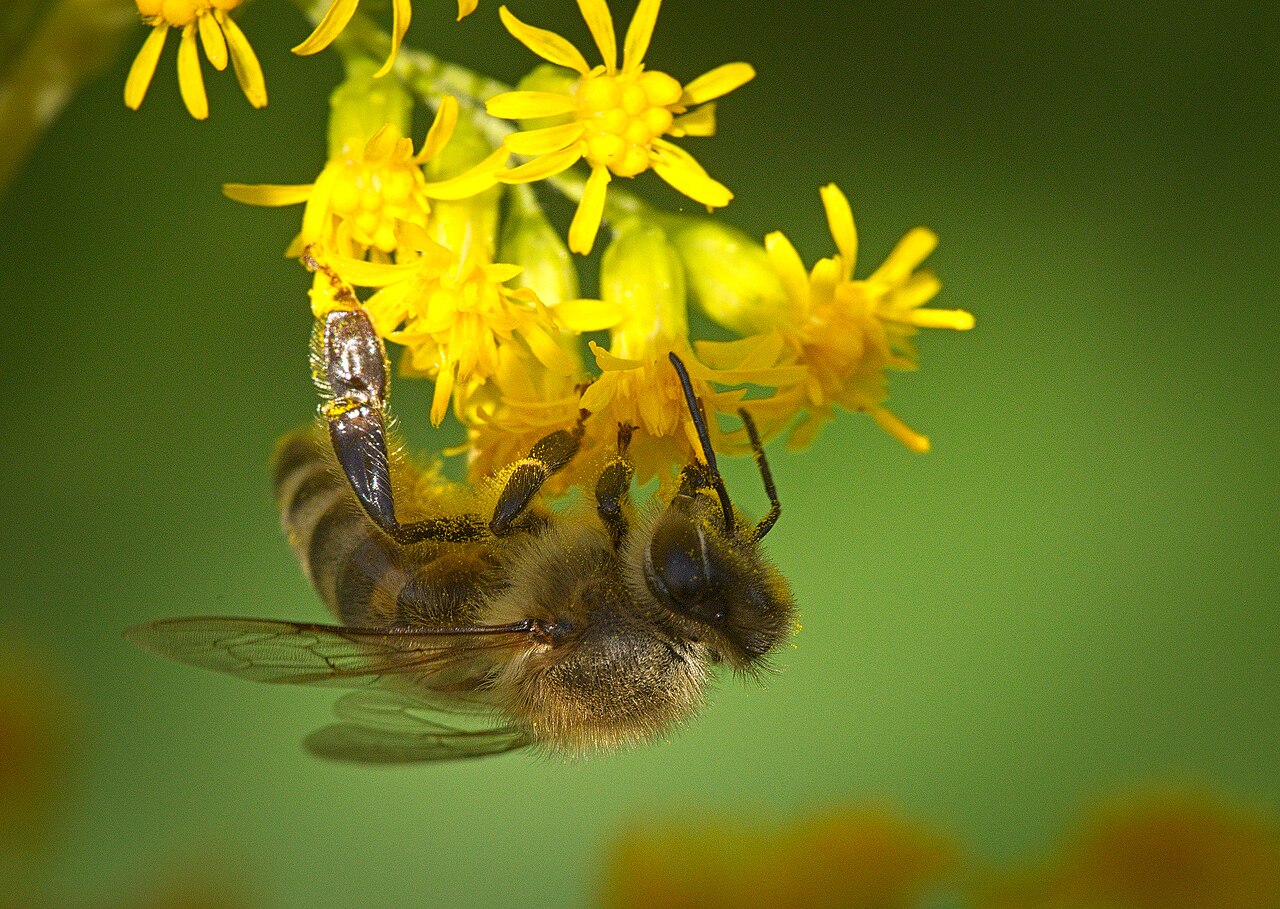
Many people assume that if a spray is allowed on an organic farm, it must be gentle on bees. It is an understandable assumption, and for some products it holds. For two of the most widely used organic insecticides, it does not.
According to the National Pesticide Information Center (NPIC), spinosad is "very highly toxic to bees" and pyrethrins are "highly toxic to honey bees." Both are allowed in organic production when used in approved formulations. Neither is a problem if you understand how and when the risk occurs.
This post compares the bee and aquatic hazards of common organic insecticides, explains why timing matters so much, and gives you a spray-day checklist to protect pollinators without giving up pest control.
Key takeaways
- "Organic-approved" and "biopesticide" are regulatory categories, not safety ratings.
- Spinosad is very highly toxic to bees while wet, but evidence suggests little or no effect on honey bees and other beneficials after sprays have dried.
- Pyrethrins are highly toxic to honey bees and very highly toxic to many aquatic animals. They break down quickly in sunlight.
- Bt (Bacillus thuringiensis) is described as harmless to honey bees and beneficial insects.
- Timing is the main protection: spray in the evening, avoid bloom and flowering weeds, and follow label pollinator statements.
- Physical barriers and habitat reduce how often you need to spray at all.
Why "organic" and "bee-safe" are different questions
US EPA groups biopesticides into biochemicals, microbials and plant-incorporated protectants. That is a way of sorting products for registration. It says nothing about whether a product harms bees or fish.
The same applies to organic approval. Being on the National Organic Program's allowed list tells you a material may be used in certified production. It does not tell you the material spares insects other than the target, and several allowed materials are highly toxic to bees or aquatic life.
"Natural" sprays sold under the FIFRA 25(b) minimum-risk exemption add another layer. EPA does not review those products for efficacy, and they are not automatically allowed in certified organic production. Organic status depends on every ingredient, including inert ones.
The hazard comparison
This table pulls together what NPIC fact sheets and the UMass tree fruit guide say about widely used organic insecticides.
| Material | Bee hazard | Aquatic hazard | Persistence | Notes |
|---|---|---|---|---|
| Spinosad | "Very highly toxic to bees"; little or no effect on honey bees and beneficials after sprays dry | Slightly to moderately toxic to aquatic invertebrates; "very highly toxic to eastern oysters"; practically non-toxic to moderately toxic to fish | Soil half-life 9–17 days | Registered since 1997 |
| Pyrethrins | "Highly toxic to honey bees" | "Highly to very highly toxic to fish"; "very highly toxic to lobster, shrimp, oysters, and aquatic insects" | Pyrethrin I half-life 12.9 hours on soil surfaces, 11.8 hours in water | Practically non-toxic to birds; short-term control |
| Bt | "Harmless to humans, animals, and beneficial insects, including the honey bee" | Not covered in our sources | Needs earlier coverage and shorter spray intervals | Targets larvae; each strain kills one or a few related species |
| Kaolin clay (Surround) | Not covered in our sources | Not covered in our sources | Needs a complete base layer before pests arrive | Full-season use linked to more plant-feeding mites |
| Neem/azadirachtin | Not covered in our sources | Not covered in our sources | Needs repeated applications | Active against leafminers, leafhoppers, mealybugs, aphids, caterpillars and more |
Where a cell says "not covered," that is a gap in our research, not a sign the product is safe. Check the label's environmental hazards section.
Spinosad: the timing product
Spinosad's profile is unusual. It is very highly toxic to bees on contact, yet NPIC notes evidence that it has little or no effect on honey bees and other beneficial insects once sprays have dried.
That makes the drying window the danger zone. A bee landing on wet foliage is exposed. A bee visiting the same plant the next morning, after the residue has dried, faces much lower risk according to that evidence.
Practical implications:
- Apply when bees are not foraging, typically late in the day, so sprays dry overnight.
- Avoid spraying crops in bloom or fields with flowering weeds.
- Consider aquatic hazard too, especially near shellfish waters, given its very high toxicity to eastern oysters.
Spinosad has also become a resistance concern for some pests when growers lean on it too heavily. See our post on keeping Bt and spinosad working.
Pyrethrins: fast-acting, fast-fading, high-hazard
Pyrethrins are highly toxic to honey bees and among the more hazardous organic materials for aquatic life. Their saving grace is speed of breakdown. Pyrethrin I has a half-life of about 12.9 hours on soil surfaces, and it breaks down quickly in sunlight.
The UMass tree fruit guide recommends "applications in late evening." It notes pyrethrins give only short-term control and are "more expensive than conventional insecticides or other organic options."
The synergist question
Many pyrethrin products are formulated with a synergist. NPIC confirms synergists are commonly added. Trade sources report that the usual one is piperonyl butoxide (PBO), which is not permitted in organic production. If you are certified, confirm that the exact product is OMRI or WSDA listed, or approved by your certifier, before you buy.
Bt: the bee-friendly specialist
Bt is the clearest example of an organic insecticide that fits the bee-safe expectation. EPA describes Bt strains as each killing "one or a few related species of insect larvae." UMass describes it as harmless to honey bees and beneficial insects.
The trade-off is precision. Bt only works on the larvae it targets, and in orchards it needs earlier coverage and shorter intervals between sprays than conventional options. It will not help against pests outside its narrow range.
Protecting pollinators on spray day
Before you spray
- Confirm the pest and threshold. Scout first. The most bee-friendly spray is the one you skip.
- Choose the narrowest effective material. Where Bt targets your pest, it carries far less pollinator risk than a broad-spectrum option.
- Read the label's pollinator and environmental hazard statements. The label is the law.
- Check organic status of the exact product, including any synergist.
- Talk to nearby beekeepers if you know hives are close, so they can plan.
Choosing the moment
- Spray in the evening when bees are not foraging, especially with spinosad or pyrethrins.
- Avoid crops in bloom.
- Mow or manage flowering weeds in and around the target area before spraying, where that fits your system.
- Stay away from water. Keep pyrethrins and spinosad from drifting or running off into ponds, streams and ditches.
After you spray
- Record product, rate, time and weather.
- Watch for bee activity the next day and note any problems.
Spray less often: barriers and habitat
The surest way to protect pollinators is to need fewer insecticide applications.
- Exclusion. In Cornell trials, organic muskmelons in mesotunnels had about three times fewer cucumber beetles and roughly six times the marketable fruit weight of uncovered plots. Row covers and netting also keep pollinators out, so you need a plan for pollination, such as opening tunnel ends at peak flowering. Our post on exclusion netting and row covers has details.
- Flower strips. A synthesis of studies found flower strips, but not hedgerows, raised pest control in adjacent fields by 16% on average. Effects on pollination and yield were more variable.
- Support. NRCS offers a Conservation Stewardship Program enhancement, E420A, for establishing pollinator habitat. Payment rates vary by state and year, so ask your local NRCS office.
A wider view: neonicotinoids
Organic sprays are only one part of the pollinator picture. The EU has banned outdoor use of three neonicotinoids since 2018, and cut residue limits for two of them from March 7, 2026, citing global pollinator decline. New York's Birds and Bees Protection Act phases out certain neonic uses, including neonic-treated corn, soybean and wheat seed from January 1, 2029, with a waiver option. Rules continue to change, so check your state's current requirements.
What to do next
- List every insecticide you use and look up its bee and aquatic hazard statements on the label and NPIC fact sheets.
- Move spinosad and pyrethrin sprays to evening and out of bloom periods.
- Check synergists in pyrethrin products and confirm organic listing with your certifier.
- Try one non-spray tactic next season, such as a mesotunnel or a flower strip.
- Ask your extension office for local thresholds and pollinator-safe spray guidance.
Sources
- Spinosad General Fact Sheet — National Pesticide Information Center (accessed Sept 2026)
- Pyrethrins General Fact Sheet — National Pesticide Information Center (accessed Sept 2026)
- New England Tree Fruit Management Guide: Insecticide Options in Organic Apple Production — UMass Amherst (accessed Sept 2026)
- What are Biopesticides? — US EPA (accessed Sept 2026)
- Conditions for Minimum Risk Pesticides — US EPA (accessed Sept 2026)
- Management of Key Insects and Insect-Vectored Diseases in Organic Cucurbits with Mesotunnel Row Covers — Cornell Vegetables (2025)
- The effectiveness of flower strips and hedgerows on pest control, pollination services and crop yield — Albrecht et al., Ecology Letters (2020)
- Establish pollinator habitat (E420A) — USDA NRCS (accessed Sept 2026)
- Maximum residue levels for clothianidin — AGRINFO (accessed Sept 2026)
- About the Birds and Bees Protection Act — Cornell CALS NYS IPM (accessed Sept 2026)
Sources & context
The source links in the draft above are retained as supplied. They are leads for review, not a claim of current verification.
Site publication date: unset. Research and source dates are kept separate. Confirm material use with your certifier and local extension service.
Your follow-up list
Saved in this browser only.
.jpg)