Key sources checked 19 September 2026. Mixed evidence; stronger guidance for food safety than for crop response. This is a local review edition.
Keep these questions close.
- Disease-control evidence for aerated compost tea is inconsistent and should be judged by crop-specific field trials.
- On edible or organic crops, compost source, additives, records, and certifier review matter more than brewer marketing.
- Use a repeated treated-versus-control comparison before adding a recurring brewing job.
Separate the three questions
Compost tea is sold as several tools at once: a disease suppressant, a source of plant nutrients, and a way to add beneficial organisms. Those are different claims and should not share one verdict. Washington State University’s review found that aerated compost tea had not produced consistent field evidence for disease control. A University of Hawai‘i and Western SARE handbook describes compost-tea production and use, but it does not turn every product or process into a proven crop treatment.
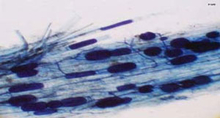
The practical reading is cautious rather than dismissive. A tea may carry soluble nutrients from its source compost, and particular crops or conditions may respond. That does not establish dependable control of a named disease. Ask a seller for replicated field trials on the same crop, disease, climate, and brewing system. Microscope images, testimonials, or a laboratory inhibition test do not answer the field question.
Food safety sets the hard boundary
For edible crops, process control matters even when the agronomic benefit is uncertain. USDA’s organic crop-producer guide says compost used for tea on organic crops must meet organic requirements and that the process belongs in the Organic System Plan. It also warns that additives such as molasses can encourage microbial growth, including growth of human pathogens if they are present. Tea made from uncomposted manure remains subject to the applicable preharvest interval.
Do not treat aeration, smell, or brew color as a safety test. Do not improvise a sugar-fed brew for harvestable produce from a recipe online. A certified operation should take the proposed compost source, additives, process, crop contact, and timing to its certifier before use. Produce farms should also align the decision with their food-safety plan and extension guidance.
A purchasing screen
Start with the problem, not the brewer. If the goal is foliar disease control, compare the tea with the extension-recommended cultural or labeled controls for that disease. If the goal is fertility, compare a documented nutrient analysis and application cost with solid compost or a known fertilizer. If the goal is a biological change, decide in advance what observable result would justify the labor.
Request the machine’s cleaning procedure, batch records, compost specifications, additive list, and field evidence. Include staff time, water, cleaning, testing, storage, and application in the cost. A low purchase price can still create an expensive recurring job, while a large automated brewer can lock a small farm into a treatment that has not earned a place in the system.
- Ask which exact crop problem the evidence addresses.
- Confirm the starting compost and every additive with the certifier.
- Price the whole process, not only the tank and pump.
- Reject guaranteed disease-control or yield language.
Run a farm-scale comparison
If the process is acceptable for the crop and market, begin with repeated treated and untreated strips or benches. Keep variety, planting date, fertility, irrigation, and spray volume alike. Decide on one outcome—disease severity, marketable yield, or transplant quality—and record it the same way at the same times. A water-only application can help separate the tea from the effect of added moisture.
One good-looking bed is not a conclusion. Edge effects, soil variation, and uneven disease pressure can swamp a small trial. Repeat pairs across the field and, when possible, over another planting or season. If there is no consistent advantage, stop. If there is, take the records to extension before scaling; a local response is useful evidence, but it is not proof that every tea or farm will respond.
Sources & context
- Compost Tea: Miracle Cure or Marketing Gimmick? Accessed 2026-09-19
- Tea Time in the Tropics Source date: 2011 · Accessed 2026-09-19
- Guide for Organic Crop Producers Source date: 2012 · Accessed 2026-09-19
- Compost and Vermicompost in Organic Crop Production Accessed 2026-09-19
Site publication date: unset. Research and source dates are kept separate. Confirm material use with your certifier and local extension service.
Your follow-up list
Saved in this browser only.